Chile Tourist Visa and Tourist Card Requirements

Do You Need a Tourist Visa for Chile?
Many travelers are surprised to learn that they don’t need a tourist visa to visit Chile.
Citizens of some countries, including the U.S., Canada, Australia, and much of Europe, can enter Chile as tourists — permanencia transitoria — without applying for a visa beforehand and are instead granted permission to enter upon arrival.
You could literally book a flight today, arrive in Chile tomorrow morning, and explore Chile for the next 90 days.
Because requirements vary by nationality though, you can check the Chilean consulate website before booking your trip.
How Long Can Tourists Stay in Chile?
Tourists can typically to stay in Chile for up to 90 days.
It’s possible to extend your stay for an additional 90 days, allowing a total stay of up to six months — called prórroga de permanencia transitoria.
To extend your stay, you’ll need to include:
- a photocopy of your passport,
- a photocopy of the tourist card that you were given upon entry, called TUM tarjeta única migratoria (it looks like a receipt)
- a photocopy of your tourist visa (if you came from a country that required a tourist visa)
- Financial solvency or support (this can be a bank statement or a notarized statement of financial support from a third-party along with their bank statement)
- a simple statement explaining why you want to extend your stay
- a $100 USD online payment (minors are exempt)
Because extension procedures and fees can change, be sure to verify the latest requirements before relying on an extension.
Tourist Visa vs. Tourist Card: Don’t Make the Mistake I Made
Though most travelers don’t need a tourist visa to visit Chile, every visitor receives a physical “tourist card” upon entering the country, and they will ask for it when you leave.
The tourist card — tarjeta única migratoria or TUM — serves as proof of your legal entry into Chile and is an important document that you’ll be asked to present when leaving the country. Think of it as your proof of admission rather than a visa.
The “card” (it’s called a tarjeta which means card in Spanish) looks very much like a receipt, so it’s easy to assume it’s unimportant and toss it into the trash (ask me how I know).
I had to wait for hours at a PDI office in Santiago and pay a small charge to have it reissued.
Lost Your Tourist Card? Request a Duplicate
Lucky for you, the process of requesting a duplicate tourist card in Chile is now free and online!
If you’re trying to figure out how to start the online process through the Chile Atiende website or through the PDI website, I’ll include some screenshots below that will guide you to the right page, but you can also just click the link above.
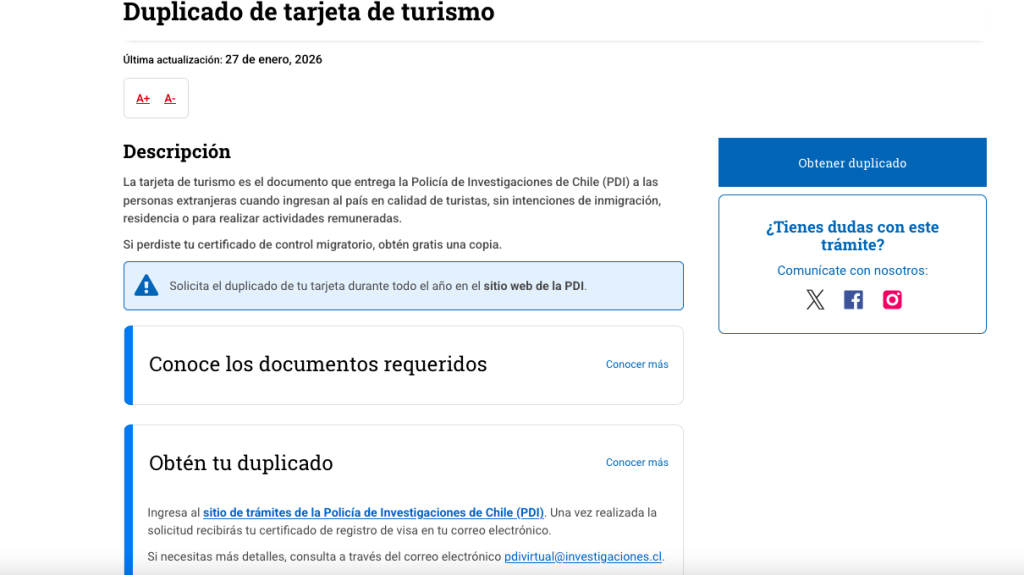
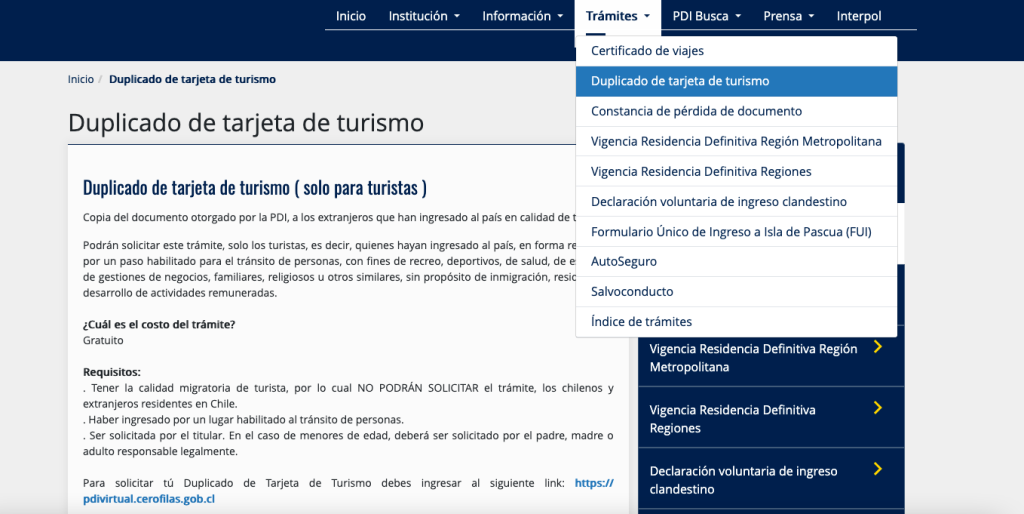
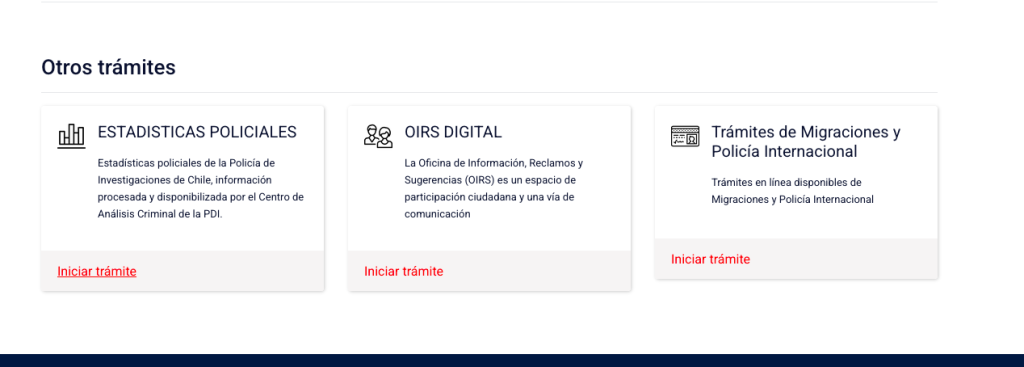
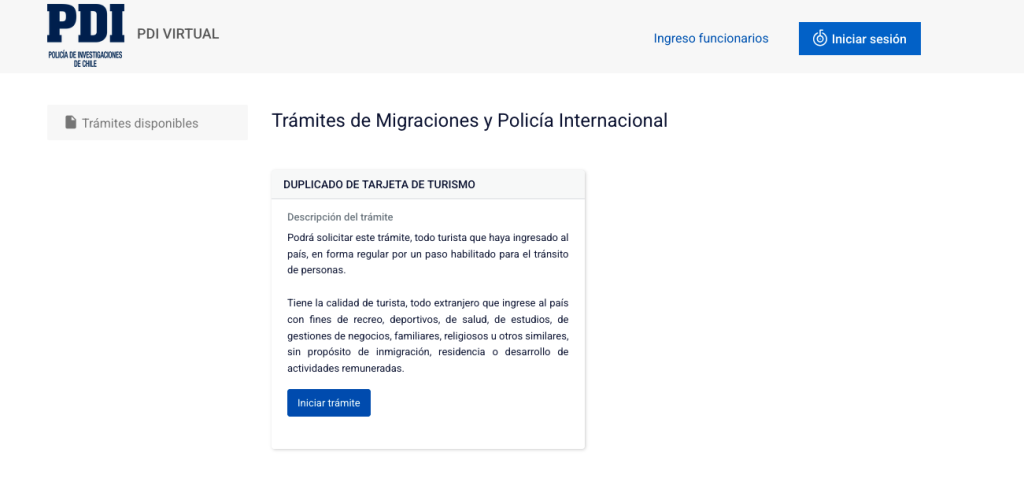
Again, you can skip all of those steps and just click here and then follow the prompts. They’ll ask you to upload a photocopy of your passport bio page and the page with the entry stamp. They may also ask you to attach a copy of your Resolución de pago de multa — a PDF document showing proof of payment for an overstay fine — only if it corresponds to your situation.
Paying the Tourist Overstay Fine
If you do overstay your tourist authorization, meaning you’ve been in Chile as a tourist for more than 90 days, and you didn’t submit a prórroga de permanencia transitoria request within that time frame, you’ll need to pay a fine that corresponds to the number of days overstayed. The amount of the fine and payment methods can be found here.
Use Your Tourist Card to Avoid VAT Tax at Hotels
As a foreigner, you don’t have to pay VAT (value add tax) on lodging.
All residents in Chile pay a 19% VAT tax (called IVA in Chile) on consumer goods, services, and imports. At restaurants, retail stores, and supermarkets the tax is simply rolled into the total cost, and the seller is responsible for remitting those taxes.
However, foreign tourists in Chile are exempt from paying VAT at hotels, which can significantly lower the price of your stay.
The hotel will need to take a photocopy of your passport as well as your tourist card, which proves that you’re in Chile as a tourist and not as a resident. You also need to give your foreign address, which the hotel is required to list on the invoice — the invoice is called a factura de exportación, which basically means they are “exporting” the service of lodging to you, a foreigner.
You will also need to pay in a foreign currency, usually in U.S. dollars. The hotel where I worked had a U.S. dollar account at their bank, which allowed us to activate U.S. dollar payments on our credit card processor.
Smaller hotels and hostels might not have USD credit/debit card payments activated, meaning that in order to issue you a factura de exportación, they’ll need you to pay in cash.
If you still prefer to pay by card on a machine that accepts payments only in Chilean pesos, it forces the hotel to declare the sale as subject to VAT tax, meaning they will need to charge you the base price + the 19% VAT surcharge.
For that reason, having cash on hand in USD or even in your local currency can help smaller hotels (especially in Patagonia and more rural areas) when it comes to offering you VAT-free lodging.
A Quick Note About Chile’s Agricultural Inspections
Although this isn’t technically a visa issue, it’s one of the most important things travelers should know before arriving in Chile.
Chile takes agricultural protection very seriously.
Chile’s fruit, wine, and agricultural industries are a major part of the economy, and authorities work hard to prevent invasive species, pests, and plant diseases from entering the country.
That means you should not bring fresh fruits, vegetables, seeds, or other restricted agricultural products into Chile unless you’re certain they are permitted.
Even something as simple as a half-eaten apple forgotten in your backpack can cause problems (ask me how I know).
When in doubt, declare. The SAG inspectors are quite friendly, and if you go through the “I have something to declare” line; they’ll help you out.
My Advice Before Traveling to Chile
Before your trip:
- Check the latest visa requirements for your nationality.
- Keep your tourist card in a safe place.
- Review Chile’s customs and agricultural restrictions.
- Verify any recent rule changes through official government sources.
Chile’s entry process is straightforward, and a little preparation can save you time and headaches later on.