

After 11+ years in Chile, we’re on a mission to deliver the best Chile travel tips — everything from power outlets to transportation.
CHILE QUICK TIPS
Chile is on UTC -4 from April to early September (same as the U.S. East Coast), then UTC -3 during the rest of the year (1-2 hours ahead of the U.S. East Coast).
- April to early September — UTC -4 (same time as U.S. East Coast)
- September to early November — UTC -3 (1 hr. ahead)
- November to early March — UTC -3 (2 hr. ahead)
- March to early April — UTC -3 (1 hr. ahead)
Voltage supply in Chile is 220V (same as Europe and most of the world, double as in the U.S. and Canada) — though most travel devices are dual voltage anyway.
Outlets used in Chile are type-L or type-C
Read the full Guide to Chilean Power Outlets & Voltage.
If you are a citizen of the European Union, the United Kingdom, the United States, Mexico, Canada, Australia, or New Zealand, you do not need a visa to enter Chile as a tourist.
Upon entry, you’ll be given a “Tourist Card” (it looks like a receipt). Don’t throw it away; you’ll be asked to present it for things like renting a car, waiving VAT tax for hotel rooms, extending you 90-day stay, and when you leave.
Also, Chile is very protective of its agricultural sector, so be careful not to bring any fruit or vegetation into the country with you.
Read our full Guide to Visa & Entry here.
On the whole, drinking the tap water in Chile is quite safe. Tap water is known to be “soft” and clean in the Lake District and Patagonia — we would avoid it in Santiago though, due to high mineral concentration and heavy chlorination. The water there has often caused me a upset stomach (and my Santiaguino husband won’t drink it either).
Bottled water is common and readily available throughout Chile, both sparkling (con gas) and still (sin gas).
These days almost all restaurants, cafes, and hotels in Chile offer free, fast WiFi to their clients.
The Chilean government also offers 30-minute WiFi sessions in certain parks and public spaces; look for “Zona WiFi ChileGob”.
That said, many Chileans and residents use their mobile hotspots because data is fast and affordable in Chile, with lots of 4G and 5G networks, and you can also get a Chilean SIM card “chip” while you’re in Chile by registering with your passport photo and “a selfie.”
Our Chilean Sim Card Guide can help you decide whether it’s best for you to use roaming, get a Chilean sim card, or use a travel eSIM.
Emergency Numbers:
131 — Ambulance
132 — Firefighters (bomberos)
133 — Police (carabineros)
136 — Mountain Rescue
137 — Maritime Emergencies
More than 6 million international tourists visited Chile in 2025, the country’s strongest tourism year since 2017, and international rankings and statistical data substantiate the claim that Chile is one of the safest countries in South America.
Global Peace Index (GPI): The Institute for Economics and Peace ranks Chile 52nd globally and second in South America (just behind Uruguay) for overall peacefulness.
THEFT
Travel advisories tend to highlight pickpockets, mugging, petty theft, and phone theft, particularly in busy tourist areas, like downtown Santiago and Valparaiso, and on public transportation. Once you get out of Santiago into small towns and especially in the South, the atmosphere is generally very peaceful.
My overall experience in Chile as both as a tourist and resident has been one of safety, notwithstanding a few personal first and second-hand run-ins with pickpockets and mugging. My advice would be use your common sense and street saavy.
You can feel the energy of an area; pay attention to that feeling. Overcrowded areas are where pickpocketing targets are most vulnerable. Isolated areas and nighttime are where mugging targets are most vulnerable.
Though it may be difficult to completely avoid standing out as a tourist, you can always look alert, confident, and aware of your surroundings and belongings.
NATURAL DISASTERS
The following information is quoted directly from chile.travel — the Chilean government’s official travel website:
What to do in case of emergencies or natural disasters?
- Chile is a country with high seismic and volcanic activity. The official authority for emergencies is the National Service for Disaster Prevention and Response (SENAPRED).
- Stay informed: Follow the @senapredchile account on X (Twitter) for real-time alerts and updates. Also, check Senapred’s recommendations in advance.
- Know the risk zones: On the website www.visorchilepreparado.cl, you can see risk maps and evacuation routes for tsunamis, wildfires, or volcanic eruptions.
- Follow instructions: Always pay attention to sirens, alerts on your cell phone (SAE), and the instructions of local authorities in case of an evacuation. [Edit: The alert system is location-based, so you can receive an alert simply by being in the area—even if you’re a visitor or using a foreign phone with roaming.]
Chile uses the Chilean peso (CLP).
$1 USD = ~ $930 CLP at the time of writing (and has hovered around 900 CLP for years).
Colorful Chilean bills come in thousands of pesos: $1.000, $2.000, $5.000, $10.000, and $20.000 (Chile uses a decimal to mark the thousands place).
So a one-thousand peso bill ($1.000) is worth just over $1 US dollar.
Likewise, a twenty-thousand peso bill ($20.000) is worth a bit more than $20 USD.
Cash — efectivo — is still used and accepted, and it can be nice to have some on hand to enjoy local street food (sopaipillas, yum!); though more and more small independent vendors also take credit cards.
You’ll find better exchange rates at Chilean banks and currency exchange locales — casas de cambio — than you will in your home country (or at any airport or hotel!).
But Chilean banks are very picky about the quality of the bills. Casas de cambio are a bit less so, but still picky. So bring crisp un-torn, unfolded, unmarked bills — and keep in mind that only the redesigned $100 USD bill with the 3D blue security ribbon is accepted.
ATMS
ATMs should offer the current market exchange rate for cash withdrawal; you’ll chose a CLP amount to withdraw, and the fair market equivalent will be debited from your account in your home currency; however, the local Chilean bank operating the ATM may give you the option to be charged in USD, offering a “currency exchange service” with an inflated exchange rate; this is called dynamic currency conversion (DCC): choose to be charged in CLP in order to avoid inflated exchange rates.
The local bank will also charge you a flat fee to withdraw, around $5.000-8.000 CLP (~$5-9 USD), and your bank may also charge you an out-of-network ATM fee as well as a foreign withdrawal fee depending on its policies.
Bottom Line: If you do want a little cash on hand for street food and local handicrafts, it’s more cost effective to exchange bills at a bank or casa de cambio in Chile, though perhaps more convenient to use an ATM.
Finally, do beware of pickpockets in downtown Santiago. Prefer ATMS and casas de cambio in neighorhoods like Providencia, El Golf, or Vitacura. Any small town outside of Santiago is also a usually a safe bet.
Chile is highly digitalized, and most businesses accept major international credit cards. Though every once in awhile, we come across a card reader that doesn’t take international cards.
This usually happens when the business’s card reader is issued by their bank as opposed to one of the major commercial payment processors used in Chile, like Transbank, MercadoPago, or Haulmer/TUU).
Also sometimes even when the bank-issued card reader is setup for international cards, it still doesn’t take American Express.
One work around we’ve found when the reader won’t take our Amex card is to use it through the Apple Wallet (Thanks Joel from Eco Mapu Cafe for that tip!). And, if Amex just won’t work, try a Visa or Mastercard.
There are plenty of credit cards on the market today that don’t charge a foreign transaction fee, but keep in mind that yours might (usually around 3% for U.S.-issued cards).
Also, if you’re given the option to charge your card in USD or CLP by the Chilean merchant, choose CLP. It will still show up on your statement as the USD (or your home currency) equivalent, exchanged at a fair market rate.
Choosing USD, on the other hand, doesn’t waive the foreign transaction fee (if you have one), but it means that the local Chilean bank is offering a “currency exchange service” often with an inflated exchange rate; this is called dynamic currency conversion (DCC).
Finally, if the waiter or salesperson asks you “Visa or Redcompra?” at checkout, the correct answer is “Visa” (even if your using a Mastercard, Discover, or Amex). What they’re really asking is “credit or debit”, and Redcompra is Chile’s domestic debit-card payment network.
TRANSFERENCIAS
What to do if your card isn’t accepted and you don’t have any cash on hand?
Offer to trade a meal for doing dishes. Just kidding.
In Chile, transferencias — direct electronic bank-to-bank transfers between Chilean banks — are a very common form of payment.
You’ll often hear people say “efectivo (cash) o transferencia” when they don’t take cards.
It’s sort of like an electronic bank wire, except funds settle instantly 24/7. In fact, a better comparison would be PayPal or Venmo.
Thanks to Wise (formerly TransferWise), you can also deposit funds from your bank account into a Chilean bank account.
It’s an option that has saved us in a pinch.
Wise works with 40 currencies in over 150 countries. You’ll need to have a Wise account connected to your bank account — or you can also fund your Wise transfer with a credit or debit card for a slightly higher fee.
The Chilean recipient doesn’t need a Wise account to receive the funds; you provide their banking details, including their name, Chilean RUT number, bank, account type (ahorro, corriente, or vista/rut), account number, and address.
We’ve been using Wise to transfer funds between the U.S. and Chile for years, and the service has only gotten better while the fees remain very inexpensive.
Transfers used to take 1-5 banking days, though lately we’ve been able to transfer funds in under 5 minutes.
I still explain to vendors sometimes that because I am transferring from a foreign account, it won’t show up in their account instantly but they can track the transfer with a shared link.
*Please note, we’re not sponsored by Wise, we just use it often and have found it to be a great service.
VAT TAX
VAT — Value-Added Tax — is a tax charged to the purchaser or consumer of goods and services. It’s something that many Europeans are familiar with, akin to the GST in Ausralia and New Zealand, and similar to the concept of the sales-tax in the U.S., though it is collected at each stage of the supply chain, rather than being charged only to the final consumer.
In Chile the VAT (known as IVA in Spanish) is 19%. That means if a business wants to receive $100.000 CLP for a product or service, they have to charge their clients $119.000, and remit the $19.000 to the government at the end of the month. The IVA is usually already included in the price tag you see.
One exception to this, however, is when Chilean businesses export goods and services. In that case, the business doesn’t collect IVA from their overseas clients and instead issues a factura de exportación (an exportation invoice).
VAT TAX EXEMPTION FOR FOREIGN TRAVELERS AT HOTELS
Hotels in Chile are also not required to collect IVA from foreign travelers because lodging foreign clients is categorized as an exported service. In order to waive the VAT and issue a factura de exportación, the hotel will need your “tourist card”/ TUM), your passport and foreign address, and payment in a foreign currency (often USD is preferred).
That’s the one exception where I’d say you can let the hotel charge your card in USD rather than in CLP. What you save in VAT will outweigh what you might lose in an inflated exchange rate.
Keep in mind that some smaller hotels may not have this option set up.
COSTS
The cost of goods in Chile, especially food, clothing, and typical merchandise is quite comparable to costs in the U.S. (and other high-income countries), not counting HCOL cities like New York, London, or San Fransisco.
The cost of services, however, are often lower — things like professional services, haircuts, repair and maintenance services.
Also, property rental and purchases tend to be lower.
If you’re coming from the Northern Hemisphere, keep in mind that Chile’s seasonal calendar runs opposite.
Spring: September, October, November
Summer: December, January, February
Autumn: March, April, May
Winter: June, July, August
Because Chile spans nearly 40 degrees of latitude, the weather differs dramatically depending on climates and landscapes.
The extremely dry deserts in the north Chile are characterized by cold (even below freezing) nights and warm days, but not scorching like other deserts around the world.
Central Chile’s beaches and vineyards have a mild climate, somewhat similar to a Mediterranean climate; it does get a bit chilly and rainy in the winter.
Both the Lake District and Patagonia are marked by four distinctive seasons, similar to their Northern Hemisphere counterparts, with the Lake District being very rainy in the winter months.
Rapa Nui, sitting in the Pacific has much subtler year-round shifts, and stays mostly pleasant.
For a more detailed look at Chile’s seasonal changes and regional cultural traditions, check out our article Best Time to Visit Chile According to Locals: Fewer Crowds, Better Weather.
See below for a list of published tips and coming soon. See you in Chile!
-
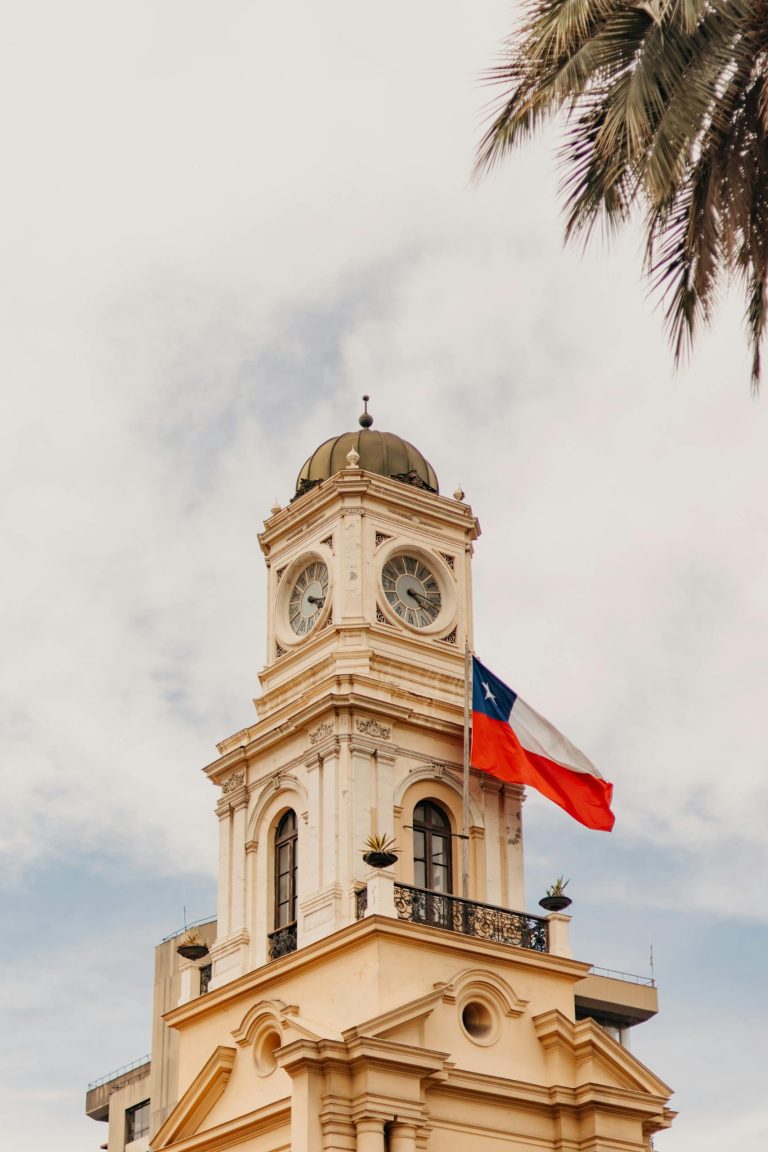
Chile Tourist Visa and Tourist Card Requirements
ByChantelDo You Need a Tourist Visa for Chile? Many travelers are surprised to learn that they don’t need a tourist…
-
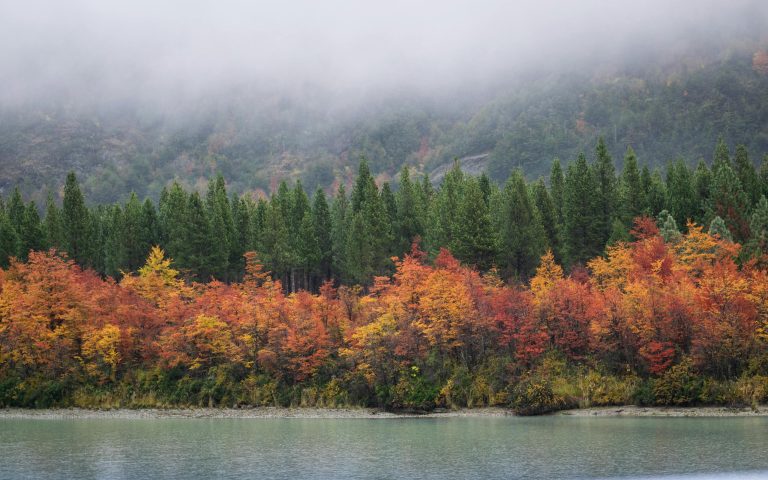
Best Time to Visit Chile According to Locals: Fewer Crowds, Better Weather
ByChantelTravel Chile Insider’s Regional & Seasonal Guide on the Best Time to Visit Chile When is the best time to…
-

Traveling in Chile With Special Dietary Needs Made Easy
ByChantelIf you’re lactose intolerant, gluten-free, vegetarian, vegan, or managing food allergies, you’ll still be able to enjoy a wide range…
Published Articles
Coming Soon…
Chile Packing List
Booking Flights in Chile
Ultimate Guide to Transport in Chile
Chile Travel Insurance
Chile Travel Safety
Renting a Car in Chile
Digital Nomad’s Guide to Chile
Solo Travel in Chile
Booking Accommodations
Backpacker’s Guide to Chile
Chile Hiking Essentials
Best Time to Visit Chile
Driving in Chile
Taking the Bus in Chile
Chilean Spanish Survival Guide
Crossing the Chile-Argentine Border
Renting a Car in Chile
Traveling with Oversized Luggage (skis/bike/etc).