Chilean SIM Card: the Complete Guide to Staying Connected in Chile [2026]

Welcome to Travel Chile Insider’s Complete Guide to Staying Connected in Chile.
Read the whole article or skip to the section that calls to you (pun intended).
To stay well connected in Chile, you’ll want a cellular data plan, but you don’t necessarily need a Chilean SIM card.
Though more and more coffee shops are offering complimentary WiFi thanks to Chile’s budding specialty coffee scene free public WiFi in Chile is, for the most part, still a thing of the future.
As U.S. transplants living in Chile since 2014, we’ll share with you the best options for staying connected in Chile in 2026.
How to Stay Connected: The Short Answer
There are — more or less — 3 ways to stay connected in Chile
1. Activate International Roaming Through Your Home Carrier
- Pros: easy to activate, reasonable data caps, calls and texts to/from home
- Cons: expensive, spotty coverage, battery drain
- Best for: very short stays, business trips
Activating international roaming is a valid, hassle-free option. But it is pricey.
2. Use a Prepaid Chilean SIM Card During Your Stay (NEW LAWS)
- Pros: inexpensive, great coverage and data speed
- Cons: slightly complicated registration, must have an unlocked phone, no international calls
- Best for: people who visit Chile frequently or live in Chile part time
Chilean carriers offer very affordable plans, boasting generous data allotments.
However, the SIM card registration processes can be cumbersome for foreigners (don’t worry, we’ll simplify them below).
This option is ideal for you if you visit Chile frequently or if you’re not afraid of a bit of Chilean bureaucracy.
3. Use a Travel eSIM
- Pros: easy to activate, competitive pricing, great coverage and data speed, can use in other countries as well
- Cons: must have an unlocked phone and eSIM capability, typically don’t offer voice or text
- Best for: digital nomads and most travelers
Travel eSIMs are easy and affordable, plus they can work in tandem with your primary SIM card.
This option is the best choice for most travelers. Activate before departure so you never lose connection.
Our Recommendation
If you’re ready and willing to take on the registration process (made simpler with our guide below), we recommend purchasing a prepaid Chilean SIM with Movistar.
Movistar stood out to us as the best overall choice when we factored in speed, coverage, price, ease of registration, and ease of locating and purchasing a card.
In terms of data per dollar, your dollar will go further with a Chile SIM than it will with a travel eSIM, but both options are much more cost effective than using international roaming.
If you want to keep your information private (and your phone is eSIM compatible), we recommend a travel eSIM from Saily. If you don’t want to worry about figuring out how much data you need, we recommend Holafly: unlmited data at great prices.
Option 1 – Activate International Roaming from Your Home Carrier
If you’re coming from the U.S., chances are you have a plan with one of the three biggest U.S. wireless carriers — Tmobile, Verizon, or AT&T.
If you have Tmobile, you may have basic international roaming already included in your plan.

Tmobile, AT&T, and Verizon High-Speed Roaming Passes
Here’s a quick look at what adding international roaming to your phone plan might cost you from these U.S. providers. Keep in mind, the fees below are in addition to your monthly plan.
$5/ day for up to 500 MB of high-speed data each day
$35 for a total of 5GB of high-speed data for 10 days
$50 for a total of 15GB of high-speed data for 30 days
$12/ day to keep your regular plan active abroad
No additional cost in Chile (and Latam) with premium plans
$35 for 5GB of high-speed data for 7 days for prepaid users
$12/ day for up to 5GB of high-speed data each day
$12 extra/ day for 5GB of high-speed data for prepaid plans
$100 for a total of 20GB of high-speed data for 30 days
While it’s helpful for overseas calls and 2FA codes, a 1 to 2-week trip can add up to and extra $70–$150 per line, which is significantly more than using a Chilean SIM or Global eSIM.
Tmobile’s Free International Roaming
We’ve used Tmobile’s basic international roaming for years simply because it’s included in our plan: it offers calls at $0.25/ minute, unlimited texts, and unlimited data at 256 Kbps.
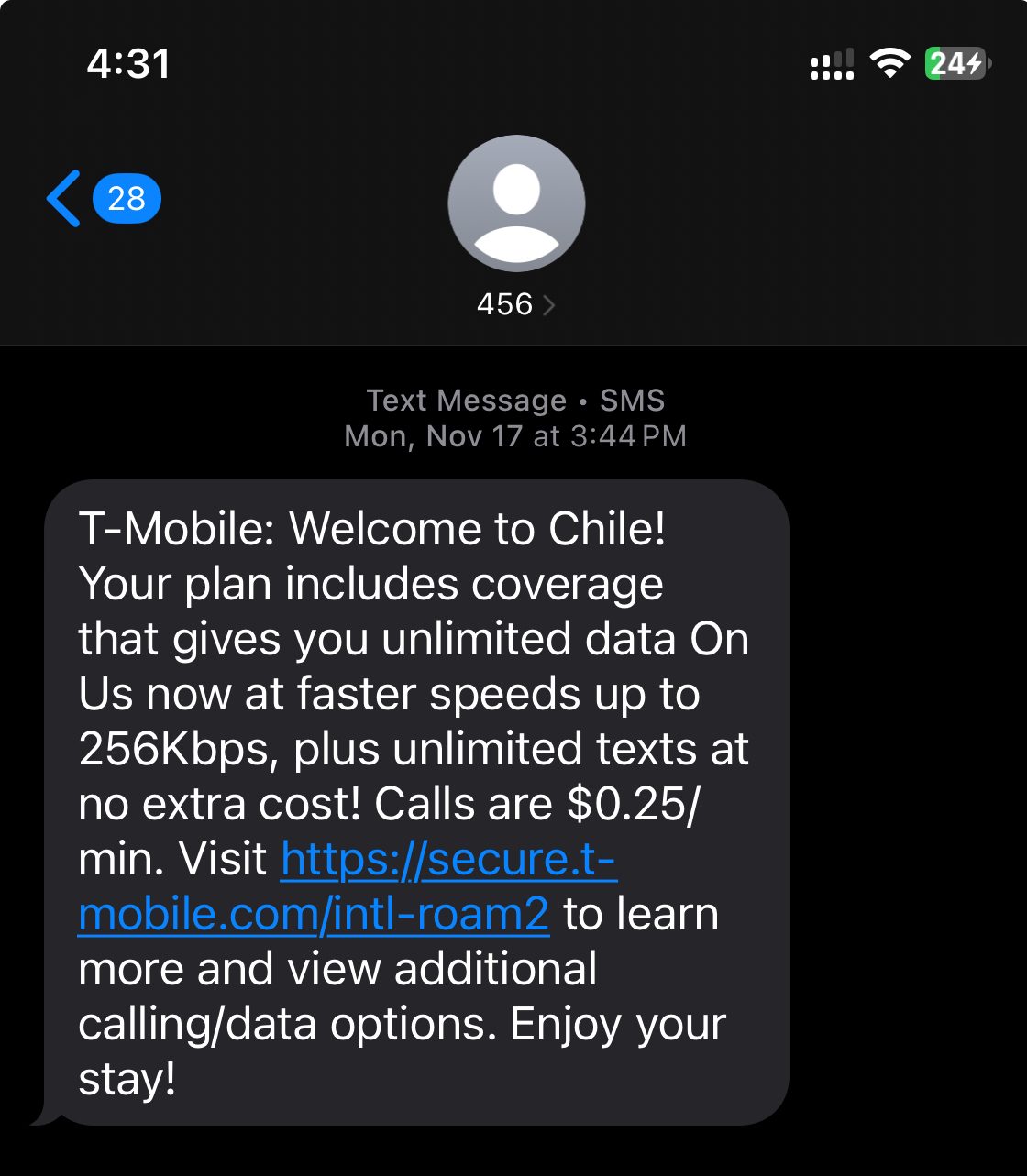
What’s the catch? Why not enjoy Tmobile’s basic roaming and call it a day? Well, 256 Kbps is slooooooooooooow.
For reference, average download speeds worldwide, as of March 2025, on mobile broadband are around ≈ 90.6 Mbps. That’s 90,000 Kbps vs only 256 Kbps!
International Roaming
Best for: Very short stays, business trips (where you may need to make overseas calls and you’ll mostly be connected to hotel WiFi for data anyways)
Pros: Easy to activate, ability to make and receive calls to/from home, receive 2FA SMS texts
Cons: Costly, coverage can be spotty, potentially slower speed
Also, as an anecdotal aside, we tried Mint Mobile’s $5 24-hour “Minternational Pass.” It was easy to activate through the app, and it worked really well for us.
Option 2 – Use a Prepaid Chilean SIM Card While in Chile
Not all of us want to toss an extra $100+ dollars to our home carrier, especially when their roaming service comes with the possibility of spotty coverage or slow data.
Your home network will piggyback off of one of Chile’s domestic networks anyways, so if your phone is unlocked (not under contract with your carrier), why not go straight to the source?
You may have heard that a new law in Chile restricts tourists from using prepaid SIM cards from Chilean networks.
Spoiler: travelers can still use prepaid Chilean SIMs — but first let me introduce you to Chile’s “BIG 4” telecommunications companies.

Chile’s Celular Network Carriers – Speed and Coverage
You have your pick of 4 carriers when it comes to mobile networks in Chile.
Entel, Movistar, WOM, and Claro. There are a few other operators in Chile, such as Virgin, but these are really the main four.



Movistar Chile was recently ranked as the fastest mobile network carrier in Chile (in 2025), with average download speeds of about 160 Mbps under 5G. The others aren’t far behind.
Movistar – 160 Mbps
Entel – 149.23 Mbps
WOM – 135.50 Mbps
Claro – 124.88 Mbps
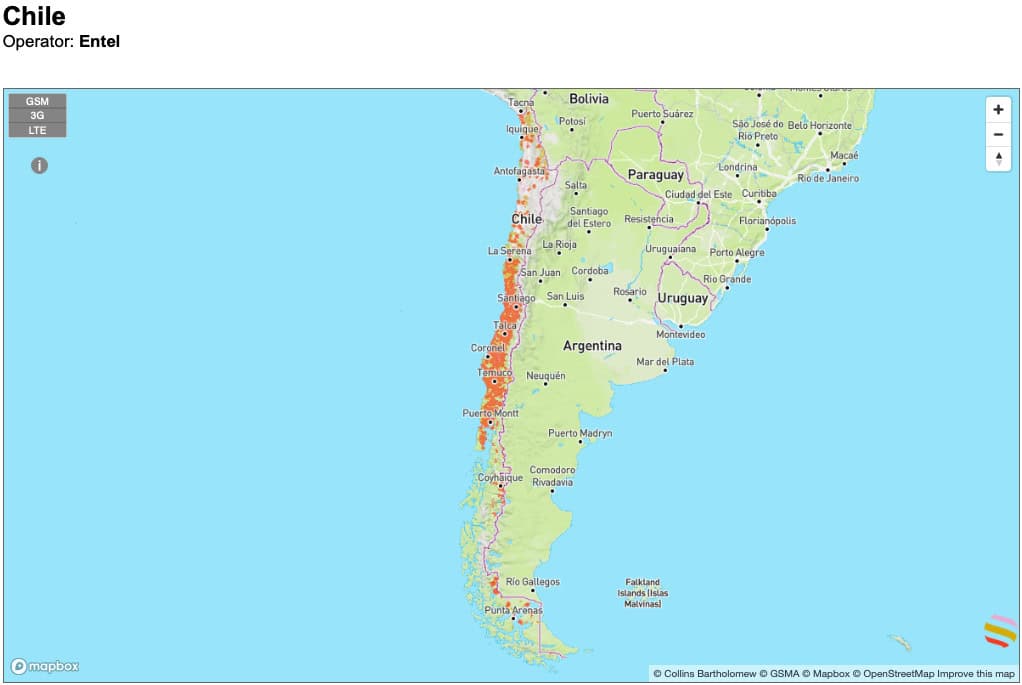
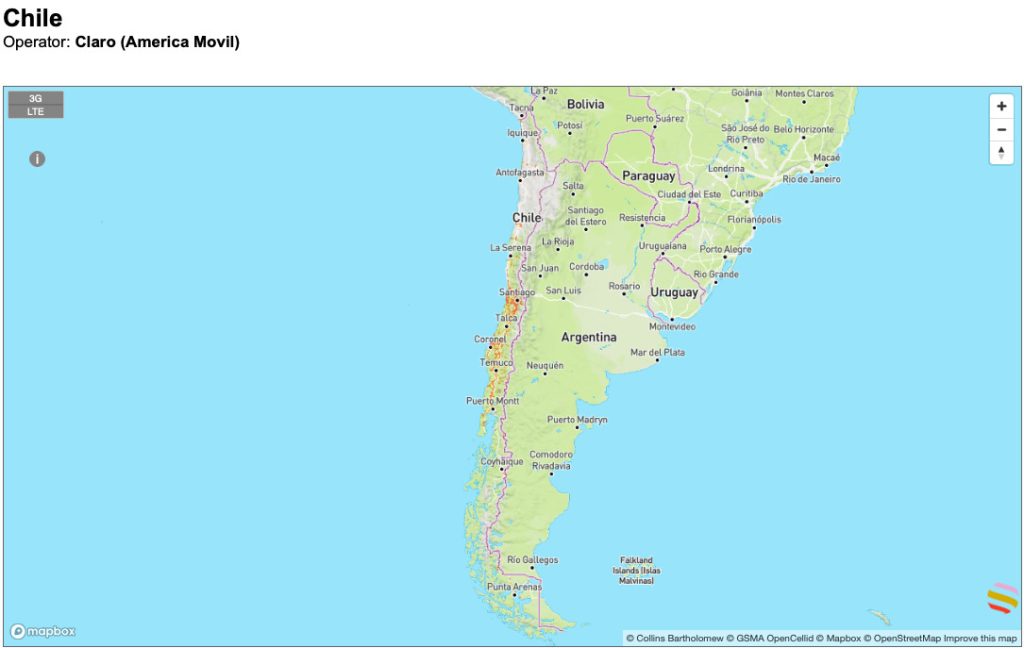
In 2026, 4G/4G LTE bands are preferred by all four companies, and 5G has gained a lot of traction across the country.
WOM ranks first in terms of 5G availability (meaning the most time spent on 5G bands is by WOM users, mainly in Santiago). Entel ranks first in terms of 5G geographic reach.
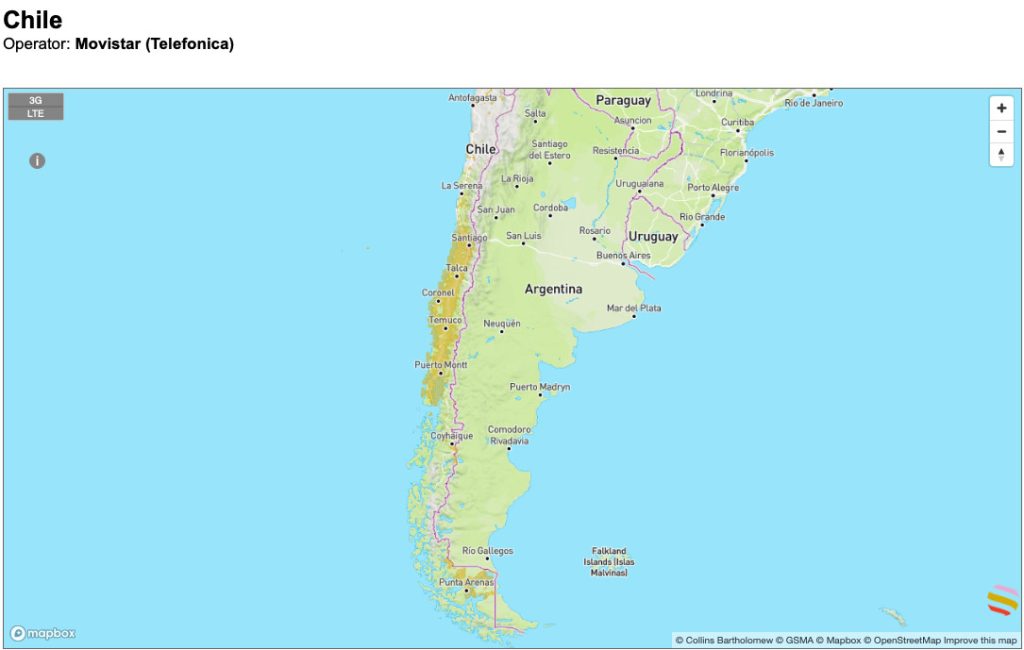
We use WOM for both our personal and business phone numbers, as well as a WOM mobile WiFi router. We’ve also used Movistar, and still have fiber optic with Movistar for our business.
We’ve been very happy with speed and coverage of both.
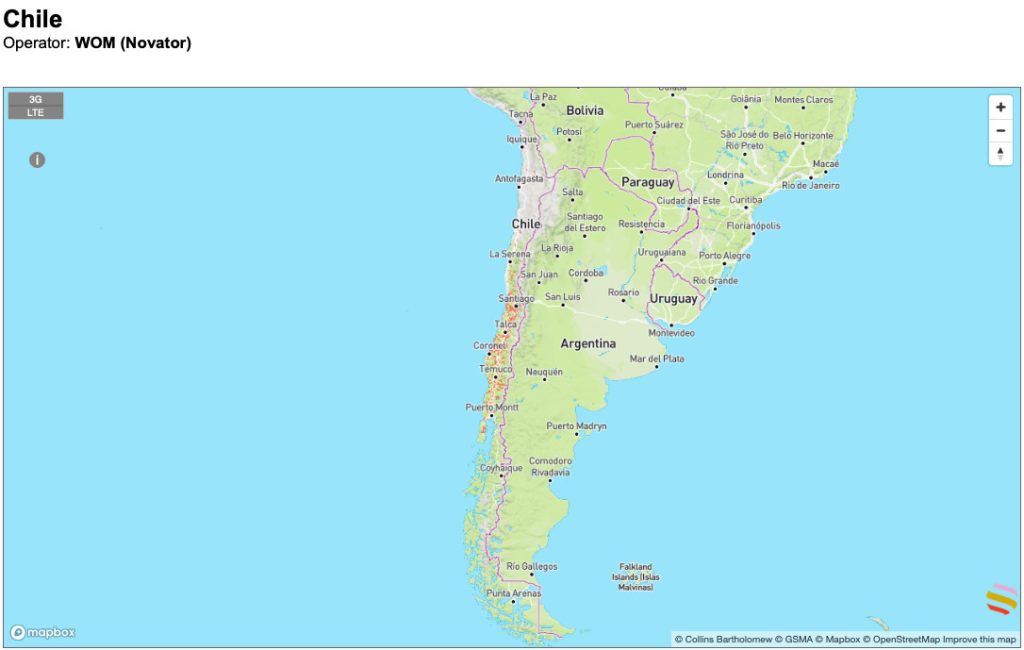
Cell service with WOM has works just as well here in Chile’s Lake District as it does traveling through Patagonia with the exception of some uninhabited areas, such as Parque National Queulat — which, to be fair, is what makes traveling to the ends of the Earth exciting.
That said, if you’re concerned about staying connected for safety while exploring Patagonia’s wilds, jump below for some suggestions.
Edit: One of our team members just got back to Chile back after a 6-month stay in the U.S., and the WOM data is noticeably slower.
Part of the reason we chose WOM, is because, when we signed up for the plan, they had a “magical cloud” of really good coverage right over our property.
We’re hoping this is just a temporary setback, and fast browsing will be back soon.
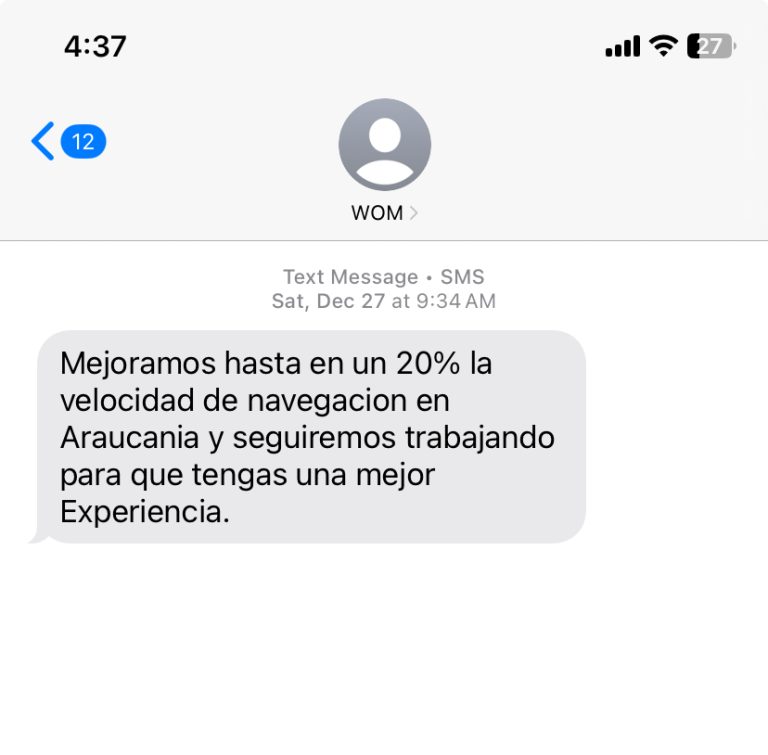
Update: Seems it was a temporary setback because days after the above edit, we got a message from WOM saying they’ve improved browsing speeds in our region by 20% (woo hoo!), and we’ve noticed the difference.
New Law Restricts Foreigners from Using Chilean SIM Cards?
Installing a prepaid SIM card — aka chip — from a Chilean carrier used to be as easy as swapping out your home SIM for the Chile SIM, and adding “saldo” (a cash balance) to the line.
But as of February 4, 2025, there are new requirements, and everybody on this Patagonia Reddit Travel Forum is in a tizzy about the Chilean law restricting tourists from purchasing prepaid SIM cards.
Several travelers said that they weren’t able to use or even purchase a prepaid Chilean SIM because the registration process now requires biometric data and a R.U.T. — a national identification number that every Chilean national and resident has … and that is used for pretty much everything in Chile.
Other travelers stated that they were able to use their passport to complete the registration process.
So, we decided to do some sleuthing.
First, we went to the Entel, Movistar, WOM, and Claro stores in the south of Chile, and asked what the options for tourists are.
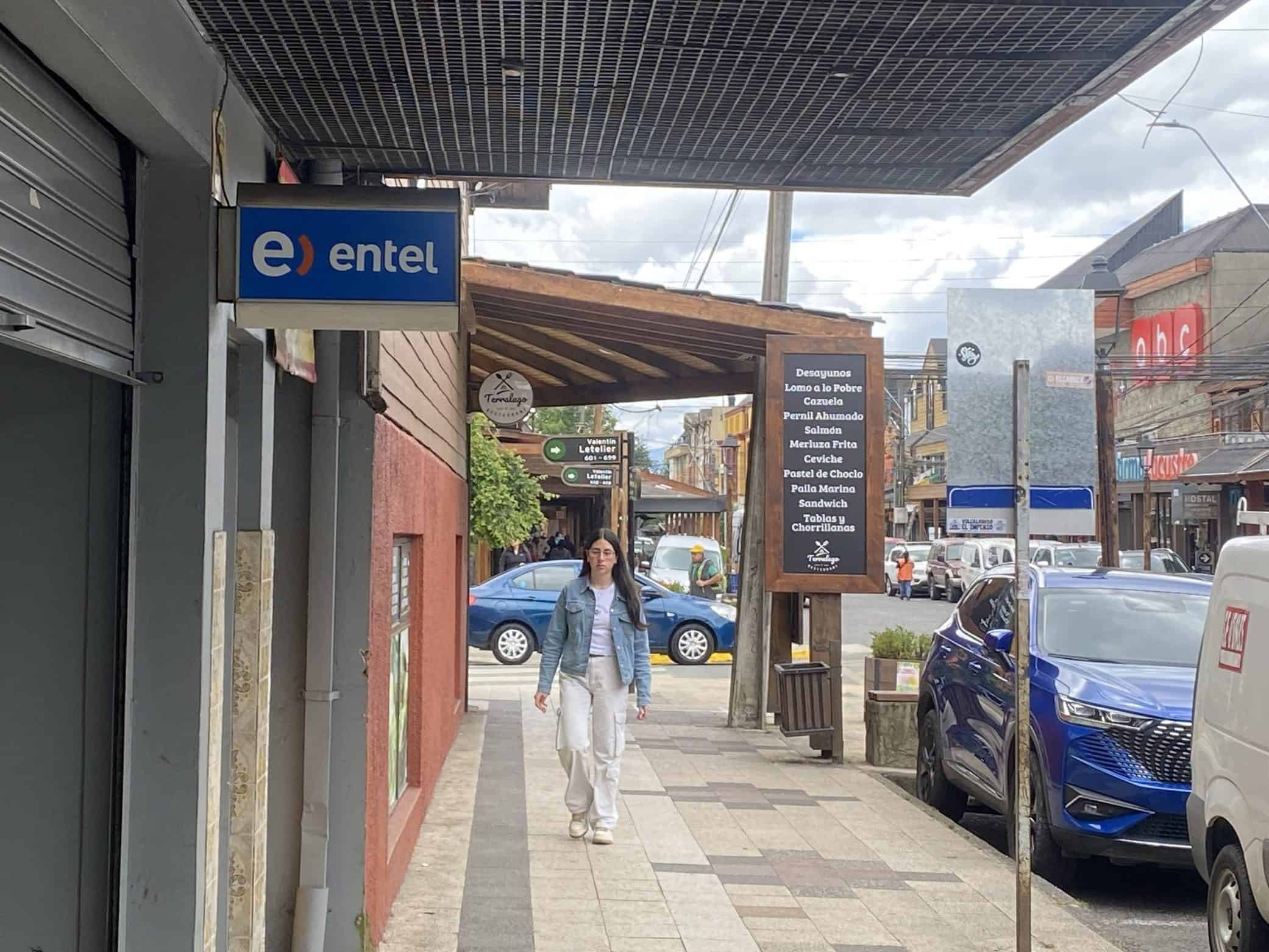
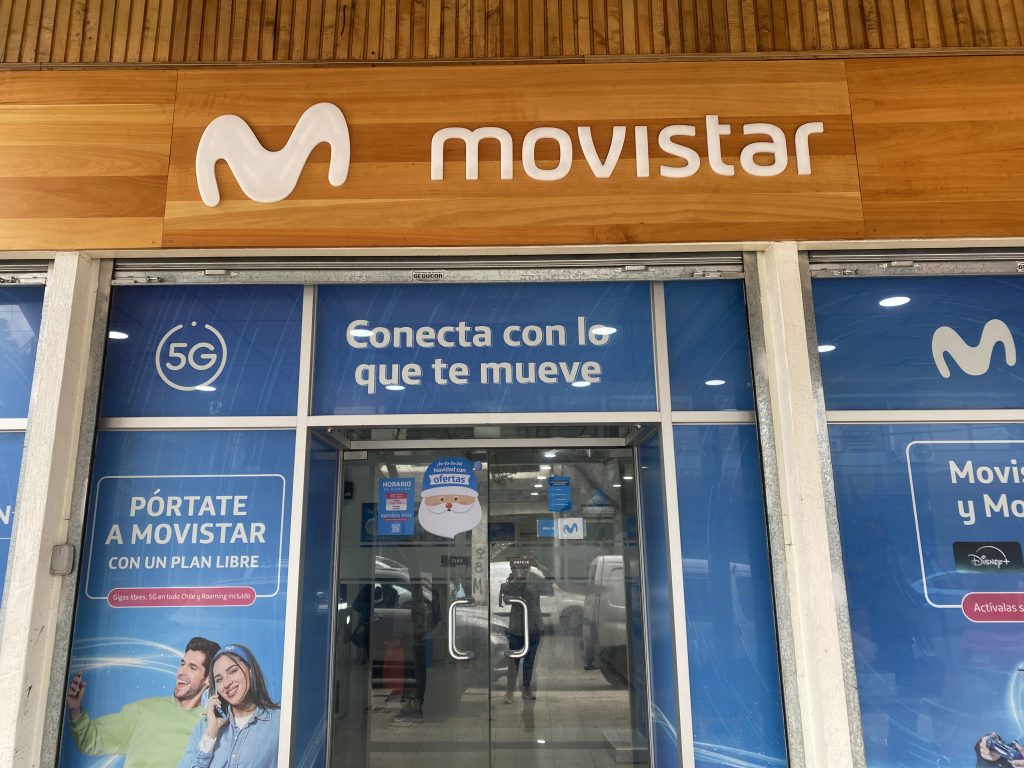
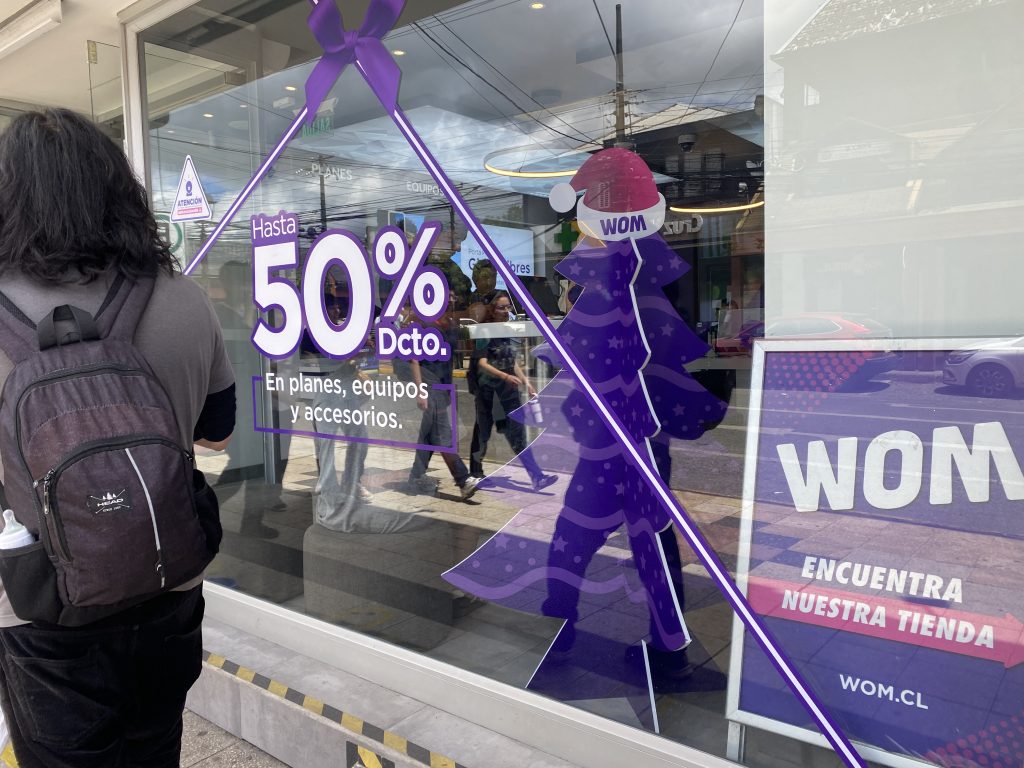
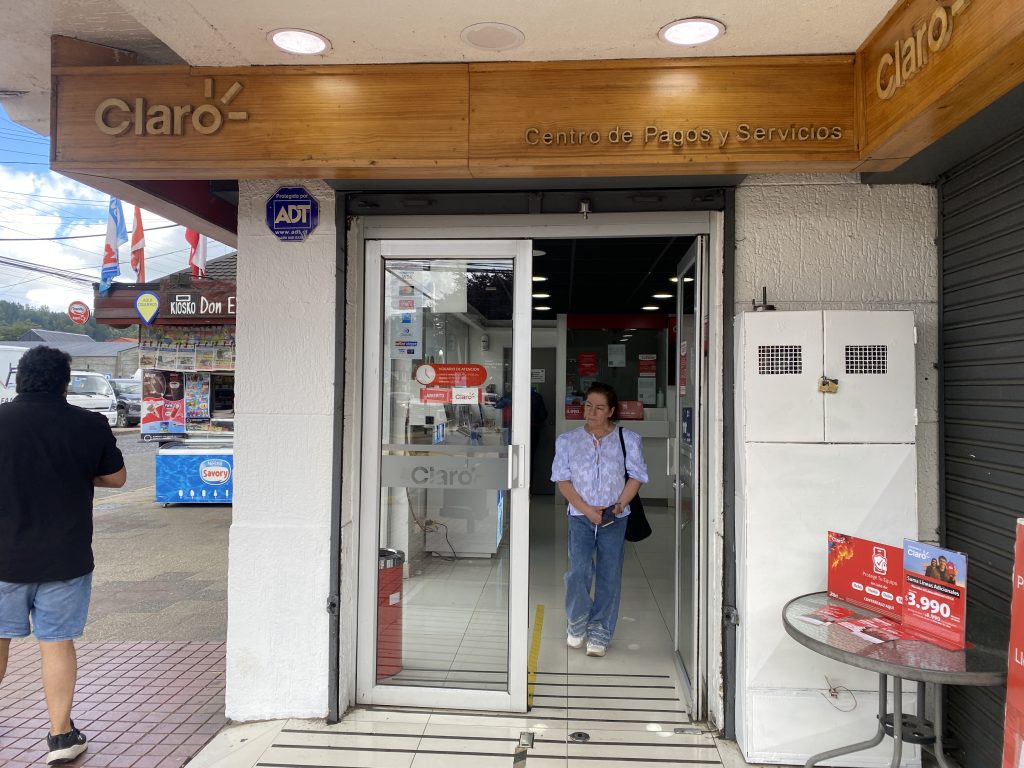
The reps in each store assured us [as of November 2025] that they’ve worked things out for travelers; you can still use prepaid SIM cards.
As long as you register the SIM with your passport number, a photo of your passport, and a “selfie” or facial recognition photo to verify that the passport photo corresponds.
This law is aimed at reducing phone theft and other illicit activities that unidentifiable burner phones often facilitate. The law states that biometric and identifying data will be stored for up to 5 years.
SIM Card Registration with a Passport
Our prepaid SIM cards are from back in the day, so in order to simulate this new process, we needed to find a new prepaid SIM.
At Claro, they were willing to give us prepaid card for free, but said they would have to activate it there in the store, and we didn’t have our passport with us.
The Entel, Movistar, and WOM reps all explained that their registration processes are self-guided.
At Entel, they tipped us off that registration must be done on a computer because the registration webpage ironically doesn’t work on a mobile device.
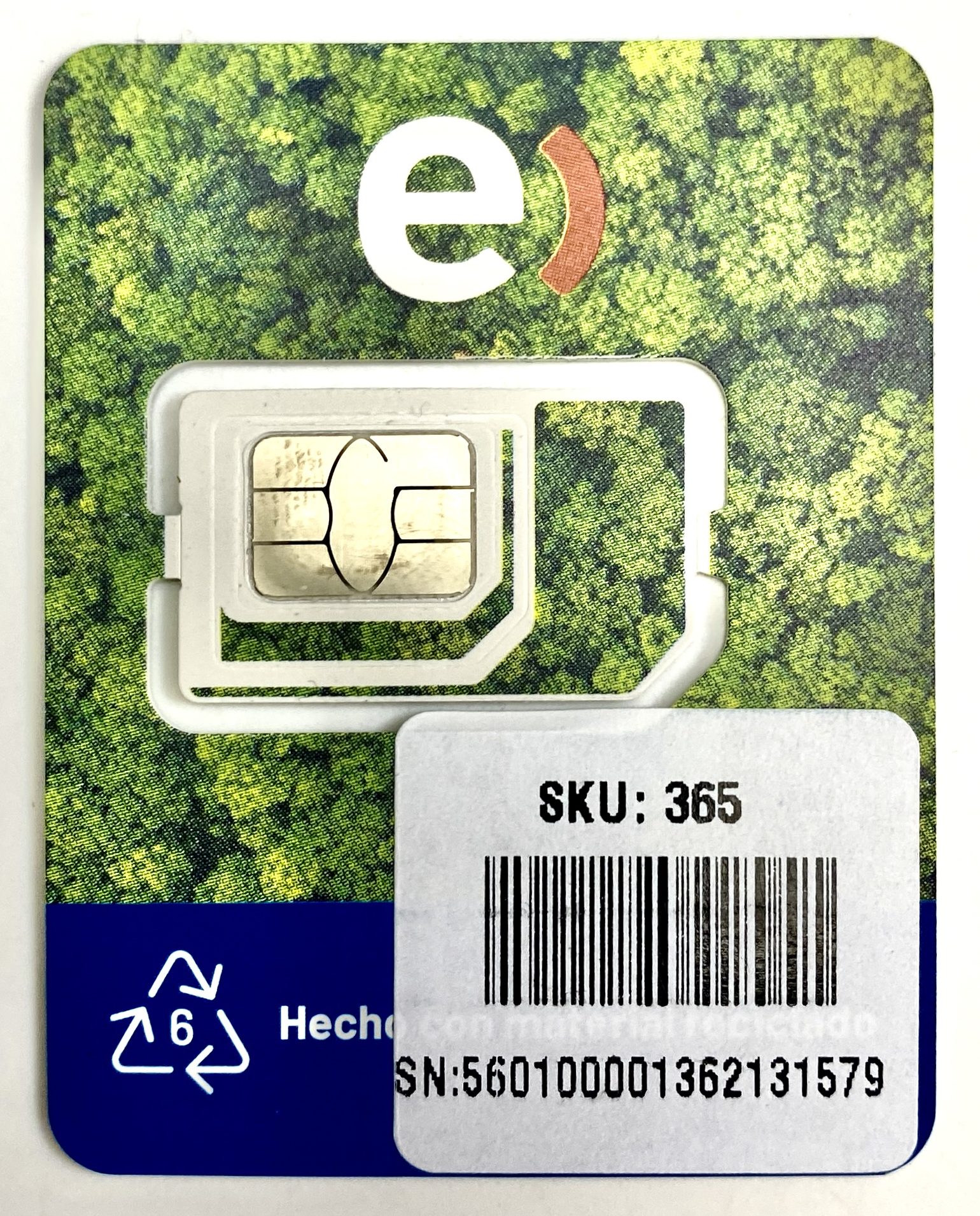
The WOM and Movistar reps, told us that once you’ve placed the physical SIM card in your phone, you’ll receive a text message with a registration link that will then guide you through the process on your phone.
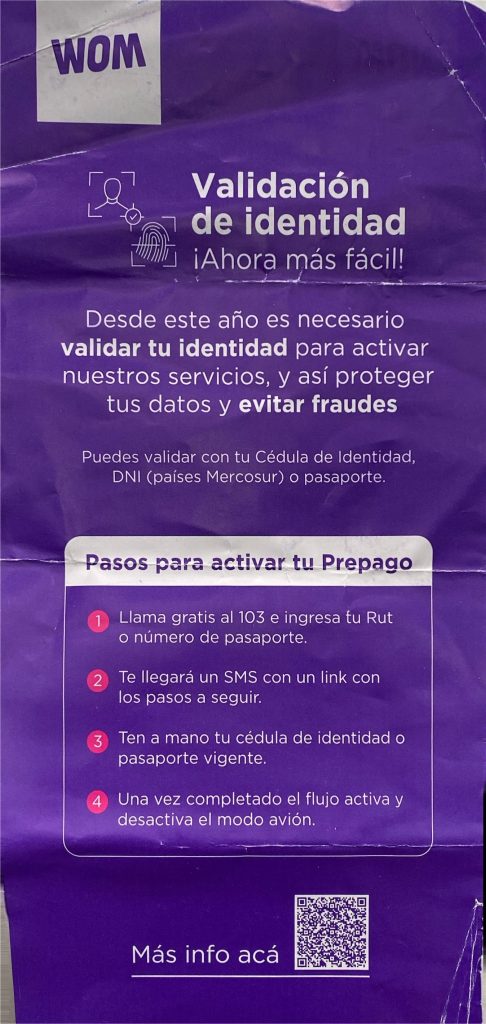
At WOM, they gifted us a prepaid SIM card with an instruction flyer, so let’s actually walk through the registration process together step-by-step.
Step-by-Step Chilean SIM Card Registration
Let’s activate a prepaid WOM card together so you’ll know exactly what to do cuando te toca (when it’s your turn). They even gave us a nice flyer with instructions, and there are instructions on the back of the chip package too.
Step 1: After placing the SIM card in your phone’s SIM tray, call toll free to 103 and enter your R.U.T. or passport number. Llama gratis al 103 e ingress tu rut o número de passport.
Step 2: You’ll receive an SMS text, click the link and follow the instructions. Recibirás un SMS con un link, haz click y sigue los pasos.
Step 3: Have your ID-card or passport on hand [you’ll need to scan it]. Ten a mano tu cédula de identidad o passporte vigente.
Step 4: Once you’ve completed the steps, toggle airplane mode on and off. Una vez completado el flujo, activa y desactiva el modo avión.
Step 5: You’ll receive an SMS text confirming that your service has been activated. Recibirás un SMS de confirmación con la activación de tu servicio.
Where to Purchase a Prepaid Chilean SIM Card
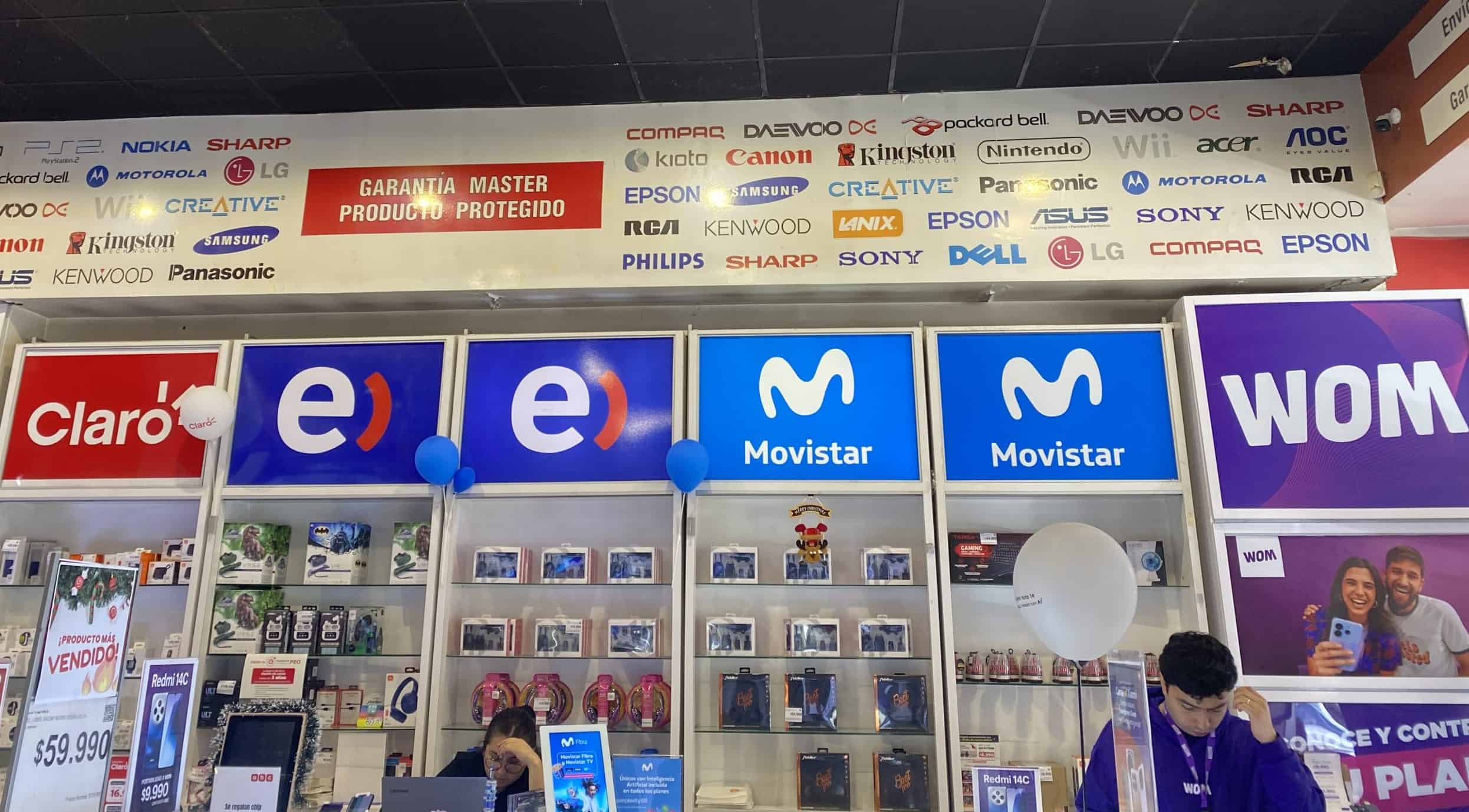
Surprisingly, some of the official retail stores only sell plans; they don’t offer prepaid chips. Some do. And often times, they’ll just give you a prepaid card for free. It’s kind of hit or miss.
We’ve heard, anecdotally, that their aren’t any stores in the Santiago Airport carrying prepaid cards, but that’s not the case: this online Santiago Airport SIM card guide shares which in terminal each store can be found in.
The most common places to buy a prepaid Chilean SIM card (believe us, we see them all the time), are at kiosks, convenience stores (minimercados), and often at the supermarket.
You can ask, “Buenos días/ buenas tardes. ¿Aquí se venden tarjetas SIM para el celular? Necesito comprar un chip prepago.”
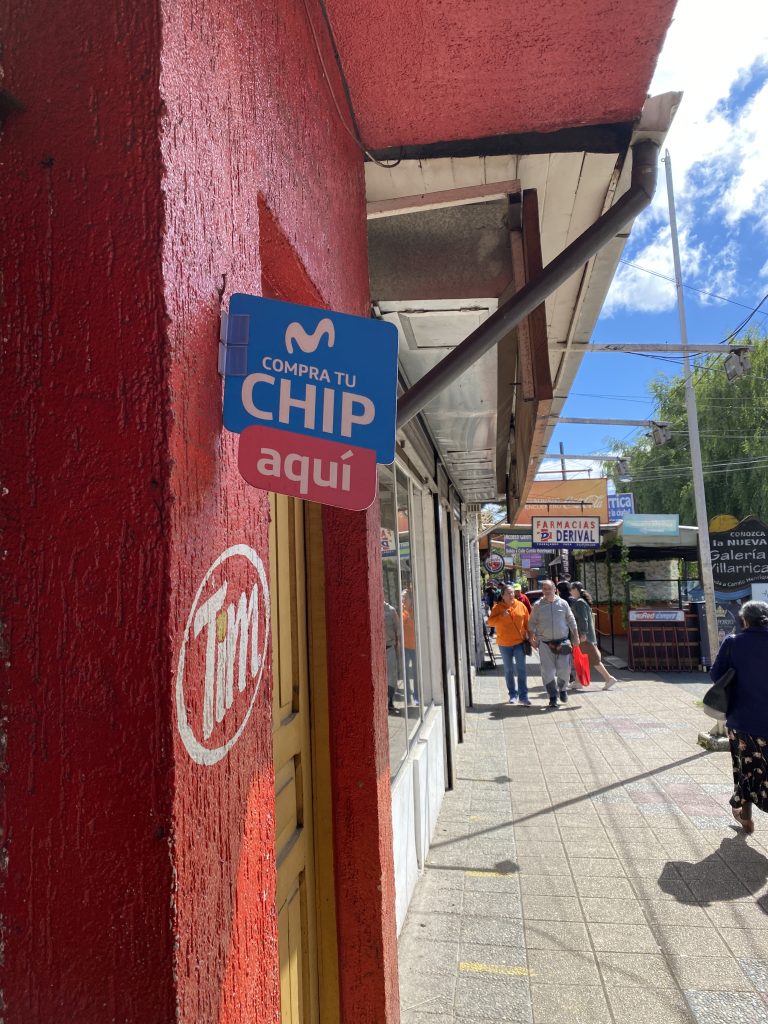
How Much Do Prepaid SIM Cards and Data Packs Cost in Chile?
A chip prepago will cost around $2000 – $5000 CLP (that’s ~$3-6 USD).
The SIM card that WOM gifted us came with 400 MB, 10 minutes of talk time, and unlimited Whatsapp for 7 days.
Whatsapp is a thing in Chile. We’m not kidding when we say everyone, even the phone companies, use Whatsapp. It’s so ubiquitous in Chile that we’ve dedication a section to Whatsapp below. TL;DR, download the app before you get to Chile.
Chilean Prepaid SIM Unlimited Data Bundles
| 1-Day | 3-Day | 7-Day | 15-Day | |
|---|---|---|---|---|
| Entel | $990 | $2490 | $5690 | – |
| Movistar | $1000 | $2000 | $4000 | – |
| WOM | $990 | $1990 | $3990 | $7990 |
| Claro | $750 | $2000 | $3000- | – |
Prices in CLP as of January 2026 | $1 USD = ~$900 CLP
How to Top Up Your Balance on Your Prepaid Chilean SIM Card
Once your prepaid SIM card is activated, you’ll need to add a balance “saldo” on it in order to use it.
The most common place to put saldo on your phone is at the pharmacy: Cruz Verde, Salcobrand, and Farmacias Ahumadas are three of the most well-know pharmacies across Chile.
“Buenos días / buenas tardes, nececito poner saldo en mi celular.”
You’ll need give the attendant some information…
1. The name of your cell provider (Movistar, Entel, WOM, or Claro)
“La companía es [Entel].”
2. Your phone number (if your not sure what it is, call someone or dial 103/ *103#)
“Mi número es el 9 1234 5678.”
All cellphone numbers in Chile start with a ‘9’ followed by eight digits. Many people, when sharing their phone number, start off by saying “the nine/ el nueve.”
3. The amount you want to put on your phone — $10,000 CLP, which is around $12 USD, is a good starting point. You can pay with cash, debit, or credit at the pharmacy.
“Quiero poner diez mil pesos.”
Some convenience stores — probably including the one where you bought your prepaid chip — can also top up your balance.
Same process. But, usually they only accept cash or CuentaRUT (the national Chilean debit card). Foreign debit and credit cards probably won’t work.
A third option is online. Our preferred website is https://www.recargafacil.cl. You may need a Chilean-issued debit or credit card here too. Though, we have had success with a U.S.-issued Amex Platinum in the past.
Which Is the Best Prepaid Chilean SIM Card?
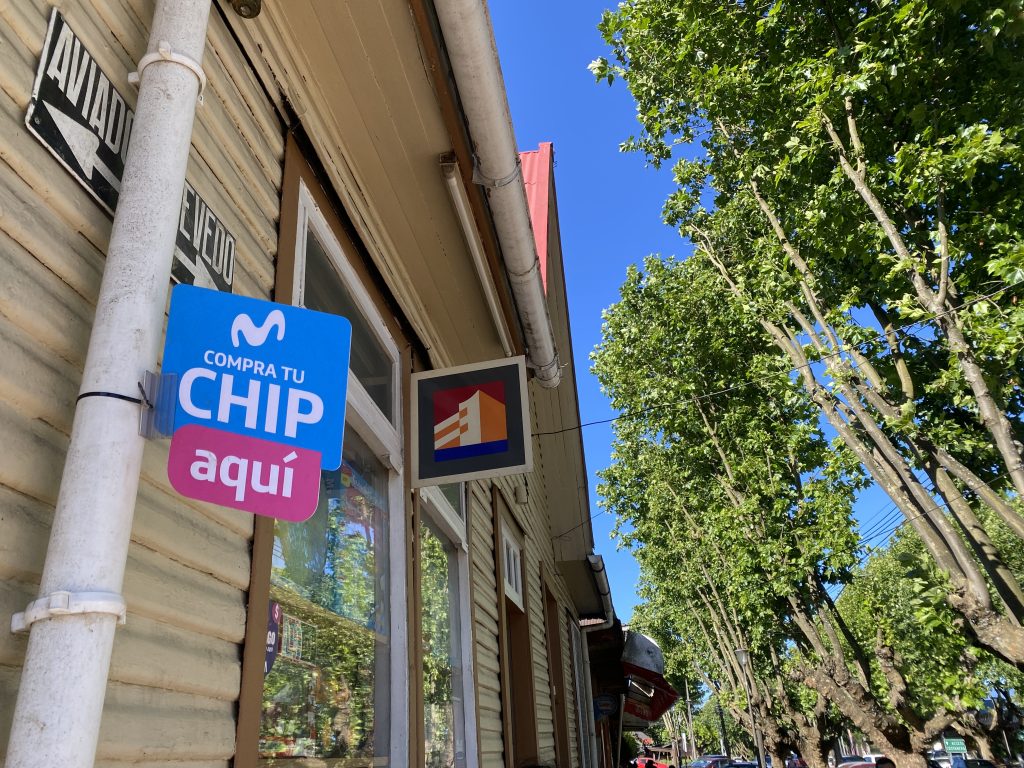
Factoring in data speed, cell coverage, ease of installation, and availability in 2025 and 2026, we think the best prepaid Chilean SIM for travelers is Movistar.
That’s what we’d recommend if you decided to use a chip prepago in Chile.
Is Purchasing a Chilean SIM Card Worth It?
We do think using a Chilean SIM card is worth it if you don’t mind the extra bureaucracy and especially if you plan to stay in Chile for a while, or you’ll be visiting Chile on a regular basis.
A prepaid Chilean chip will be far less expensive than using roaming and slightly cheaper than a travel eSIM too, and it will mostly like offer the best coverage and fastest speeds.
Just keep in mind that your phone can’t be under contract and you cannot make or receive calls to/from other countries with a Chile SIM .
Chilean SIM Card
Best for: extended stays, people who visit Chile often
Pros: great speed and coverage, best value for money
Cons: must have unlocked phone, can’t make calls outside of Chile, new laws in 2017 and 2025 have made it more difficult for foreigners to use Chilean SIM cards
Staying in Chile for More Than 30 days? How to Register Your Phone
There’s actually another law that went into affect in Chile back in 2017 that requires anyone with a phone purchased outside of Chile to register their phone with the Chilean Subsecretary of Telecommunications, SUBTEL, in order to be able use the phone for more than a month with a Chilean cell service provider.
So, you potentially need to register the Chilean SIM card as discussed above and register your phone’s IMEI number with SUBTEL.
But, if you’re staying in Chile for under 30 days or you won’t be using Chilean SIM card, this won’t apply to you, and you can skip this section.
Phones purchased outside of Chile can be registered in a national database within 60 days or possibly up to 120 days for foreigners.
Nevertheless, once a Chilean SIM card is activated on your non-registered phone, the SIM will only work for 30 days in Chile.
I’ll walk you through it step-by-step in a separate article.
Option 3 – Use a Traveler’s eSIM
If you have privacy concerns or the registration process for using a Chilean SIM seems overly cumbersome, there is a third option.
In the digital age, purchasing and installing a travel or international eSIM before you arrive in Chile is by far the most convenient option for travelers.
If your phone was made after 2018, chances are it’s eSIM compatible, and eSIMs are a game changer for travel.
Your phone isn’t eSIM compatible? We’d recommend using eSIM.me — a reusable physical SIM card that lets older phones download, store, and switch between eSIM profiles using an app.

Best Travel eSIMs for Chile Compared
We’ve compared six of the most popular travel eSIM providers: Airalo, aloSIM, Holafly, Jetpac, Roamless, and Saily to see which option is best for Chile.
Note: We’ve never had a need to use a Traveler’s eSIM in Chile. But, as we try each of these providers, we’ll update this article or create an additional article based on our experiences.
At the time of writing, we’re providing this information based on thorough research from first-hand user experiences, third-party reviews, and the official websites of these companies.
eSIMs for Chile Compared
| Speed in Chile | Chilean Partner | Talk + Text | Routing Breakout | Perks | |
|---|---|---|---|---|---|
| Airalo | 4G | Movistar, Claro | Yes w/ Global Plan | Various Worldwide | Unlimited and fixed data plans |
| aloSIM | LTE | Claro or best available | Yes w/ Hushed App | HK, Singapore, Poland + | Comes with phone # |
| Holafly | 4G/5G | WOM, Movistar | No | HK, Singapore + | Unlimited data for as many days as you want |
| Jetpac | 4G | Claro | No | Netherlands, HK | Whatsapp and GMaps work without data |
| Roamless | 4G | Movistar | Soon | U.S. or local carrier | Pay-as-you-go option |
| Saily | 4G/5G | Best available | No | Netherlands | Security and VPN |
Airalo – Legacy Provider, Best Everyday eSIM
Trustpilot 3.9
- World’s first global eSIM marketplace, good value for money
- Chile included in Airalo’s Latin America Plans (along with 16 other countries) and Global Plans
- Global Plans have a talk/text option (commonly an Austrian or +1 USA number)
aloSIM – Talk&Text, Best Call eSIM
Trustpilot 4.1
- Canadian based company, offers straightforward data and talk/text options
- Chile (+ 9 other countries) included in South America Plans and Global Plans
- Partners of Hushed App (a VoIP service), for talk and text (often +1 US/Canada codes)
You can install the Hushed app on your phone and use the associated number to make/receive calls and SMS over the internet while your aloSIM eSIM is providing the data.
Holafly – Unlimited Data, Best Creator’s eSIM
Trustpilot 4.6
- Holafly is known for its unlimited data plans (fair usage throttling applies)
- You can chose any number of days, with daily rates decreasing in proportion
- Holafly’s Latin America Plans (Chile + 17 other countries) and Global Plans start at $9.90 per day (and steadily drop as more days are added)!
Jetpac – Discounts Galore, Best Budget eSIM
Trustpilot 4.7
- Jetpac is always running deals: at the time of writing, the 30GB pack (normally $90) is only $50, there’s a 15% holiday discount, and you can up to 20% off when buying two or more eSIMs.
- Also you get unlimited Whatsapp, Uber, and Google Maps (even when your data runs out)
- Offers a Latin America plan (countries included are not listed on the website) and a Global monthly subscription plan
Roamless – True Mobile Operator, Best Global eSIM
Trustpilot 4.6
- While other eSIMs borrow cellular networks, Roamless runs its own telecom infrastructure provided better, faster connectivity (and very soon will provide voice and SMS too)
- Roamless has a 30-day fixed plans for Chile and Latin America (Chile + 13 other countries)
- Their pay-as-you-go Flex plan never expires and is by default a global plan with competitive pricing and in-app calls
Saily – Virtual Location, Best Privacy eSIM
Trustpilot 4.7
- From the makers of NordVPN, Saily is a security forward eSIM offering a lightweight VPN
- Saily’s eSIM also provides ad and tracker blockers, and let’s you use one eSIM for all plans
- The Latin America plan includes Chile + 11 countries, but the Global and Ultra plans offer more value
eSIM Prices for Chile Plans Compared by Gigabytes
Unless otherwise specified, the validity period for the data amount listed on the chart below is 30 days.
Prices in USD rounded to nearest dollar for Chile plans as of January 2026
Data Routing and Latency
Most travel eSIM providers route your traffic through servers in a different country (as shown in the chart above) before it reaches the internet. This extra hop can add a small delay — latency — mostly for video calls, and map and website loading .
It also makes it so that websites and apps see your connection as coming from outside Chile, which can affect access to location-restricted services or local pricing, such as airline tickets.
Some companies like Roamless, aim to exit data through the country you’re physically in, thereby decreasing latency.
Still, others like Saily (from the makers of Nord VPN), exit data through their hub in the Netherlands. That said, Saily has a unique “Virtual Location” feature that functions like a lightweight VPN.
It allows you to manually select you exit point — the country that you’ll appear to be browsing from — a great option for added security and accessing location-restricted websites.

Talk and Text
Both Airalo (global plan only) and aloSIM (through the Hushed app) offer solutions for traveler’s who need a working phone number for calls and SMS text messages.
Roamless is also working on a soon-to-be-launched virtual phone number, which will allow users to receive calls and SMS texts — in the meantime they offer a unique in-app calling feature with their global Flex Plan that allows you to call international phone numbers.
So, for example, in the rare event that your Chilean hotel didn’t use Whatsapp, you could call them through the Roamless app at $.01/ minute, and avoid making an expensive call through your home carrier.

Customer Service
Each of these providers has 24/7 customer service, either through live chat, email, or tickets. Each has a dedicated mobile app with download instructions and/or 1-click download, data monitoring, and top-ups.
All of these eSIMs also allow for hotspot/ data sharing, and all have preinstallation options, with most activating the validity period automatically upon connection to a Chilean network.
Each provider also offers refunds under certain conditions. And every provider on this list offers some sort of loyalty program, cash back, rewards, credits, or discounts.
eSIM Prices for Chile Plans Compared by Validity Period
| 7-Day | 30-Day | 30-Day | |
|---|---|---|---|
| Airalo | $10 3GB | $15 5GB | $48 20GB |
| aloSIM | $ 5 1GB | $18 5GB | $48 20GB |
| Holafly | $30 ∞GB | $94 ∞GB | $94 ∞GB |
| Jetpac | $10 3GB | $18 5GB | $60 20GB |
| Roamless | ——- | $20 5GB | $65 20GB |
| Saily | $ 5 1GB | $18 5GB | $49 20GB |
Prices in USD rounded to nearest dollar for Chile plans as of January 2026
The chart above is simplified for the sake of easy comparison. We should note that several of these eSIM providers have other time frames (aka validity periods) available.
Most eSIM providers use the “data pack” or “bundle” format: meaning the amount of Gigas purchased must be used within the selected time frame (validity period) or they will expire.
A few of these providers, however, offer a slightly different format.
Holafly for example lets users choose the exact amount of days desired, offering unlimited data each day. This is a great option for creatives and digital nomads who work on-the-go and want the peace of mind that their data will be there when they need it.
Also, while all of Roamless’s fixed data bundles for Chile are valid for 30-days, they also have a pay-as-you-go option (for slightly more per Giga) that never expires and works anywhere in the world, so you never lose the data you’ve purchased.
Travel eSIM
Best for: Digital Nomads and Most Travelers!
Pros: Easy, instant download, no coverage gaps, not hunting for a prepaid chip
Cons: Must have eSIM compatible phone, slightly more expensive than a Chile SIM
How Many Gigabytes Do You Even Need?
Carriers love to tell you how many gigabytes you’ll get with their plan, but how many of us really know what a giga can do? (We’ll be honest; we didn’t)
To help you decided which option will give you the best value for your money while traveling, here’s a really quick guide to how many GBs you really need.
| Activity | ~ usage per 1GB of data |
|---|---|
| Messaging apps (WhatsApp, iMessage) | 5,000–10,000 messages |
| Emails | 50k (text only), 100-200 w large attachments |
| Web browsing | 8–12 hours |
| Maps & navigation (Google Maps, Waze) | 4–8 hours |
| Social media (scrolling + posting) | 1–3 hours |
| Video uploads | 10-20 (30s) short videos; 1 long HD video |
| Video streaming (short clips, reels) | 1-3 hours |
| Video calls (Zoom, FaceTime, WhatsApp) | 1-2 hours |
| Audio calls | 15-25 hours |
| Music streaming | 10-20 hours |
“The average smartphone owner used 19 gigabytes of data per month in 2024” – Nerd Wallet
For most travelers, 1–2 GB of data per day is plenty in Chile. Light users who mainly rely on Google Maps and WhatsApp can get by on less.
More active users — posting on social media, streaming short videos, or using ride-share apps frequently — should plan on 2–3 GB per day.
“Unlimited” eSIM plans are nice for peace of mind (keep in mind that many throttle speeds after around 3 GB per 24-hour period).
If you plan to do heavy streaming, uploading, or hotspotting, it’s better to go with unlimited or buy an ample package.
Some eSIM providers also have data calculators on their websites to help you estimate how much data you will actually need.
If you’re traveling in Chile, you should know: WhatsApp is everything.
Locals use it for personal and work calls, texting, and group chats.
Businesses use Whatsapp to communicate with clients, allowing customers to make reservations and orders.
Even banks and the phone companies use it for customer service (and sometimes 2FA).
If you’re coming from the U.S., this can feel different, since SMS/iMessage dominate personal texting, and VoIP apps are not terribly common, especially not for calling businesses.
In short, download Whatsapp before you arrive, and you’ll instantly feel more connected in Chile.
Because Whatapp is so integrated into the fabric of daily Chilean life, it’s typical for the Chilean SIM carriers to offer free unlimited WhatsApp use.
The Jetpac, eSIM also notably, offers users unlimited Whatsapp, even when data has run out.
If for some reason, you do run out of data, you can also use Whatsapp over WiFi to make calls and text.
Because Whatsapp is a VoIP, you only need data (from your eSIM, for example) or WiFi to use it; however, you must have a working phone number for initial setup. Whatsapp will send you an SMS code in order to register the app on your device.
Once it’s registered, you can disconnect your primary SIM.
Staying Connected for Trekking Safety
If you’re hiking or trekking outside populated zones — especially in Chile’s Patagonia or the iconic Torres del Paine — you won’t have a reliable mobile connection.

Besides following basic hiking and mountaineering safety practices: registering with park rangers, traveling in a group, studying routes ahead of time, wearing proper gear and clothing, carrying first aid, and never “braving it” if the weather gets bad…
For added peace of mind, many hikers carry a satellite GPS communicator, such as a Garmin inReach, ZOLEO, or SPOT device.
In Patagonia, weather conditions can go from pleasant to dangerous without warning in minutes. And, even well-prepared hikers have been caught in extreme conditions. Sadly a group of foreign hikers were caught unawares in a sudden blizzard at the end of 2025. So, please put your safety first. Always.
These devices work independently of cellular networks and allow you to send check-in messages, share your live location, and trigger an SOS in emergencies using satellite networks.
Satellite messengers typically require a monthly subscription, but they’re invaluable for solo hikers, backcountry treks, and multi-day routes where help may be hours or days away.
2FA Workarounds
Two-factor authentication (2FA) is an important security layer, but it can be frustrating when you’re abroad — especially if verification codes are sent via SMS to your home number and you’re using a local SIM or data-only eSIM.
Here are the most reliable ways to avoid getting locked out of your accounts while traveling.
- Use an authenticator app like Authy, Google Authenticator, Microsoft Authenticator, or 1Password; these will even work on airplane mode
- Set up your 2FA codes to go to email or in-app before you leave; many banks now have this option
- Use VoIP apps with caution; some 2FA codes can be sent through VoIP messengers, but this option is less secure and therefore less available
- Activate your home SIM only when you need it; use your travel eSIM for data, and turn on your home SIM only on occasion if you need to receive a 2FA code (roaming fees will apply for that day)
Frequently Asked Questions
What if my phone isn’t eSIM compatible?
If you have an older phone that is not eSIM compatible, you can buy a physical SIM card from eSIM.me, where you can download and store eSIM profiles from several providers.
Do Chilean phone companies offer eSIMs?
Yes, Chilean phone companies have started to offer eSIMs, but it’s not as simple as buying online and downloading before you go. Entel, Claro, Movistar, and WOM have only recently integrated eSIM technology into their systems.
Entel, Claro, and Movistar offer eSIMs only for contracted monthly plans. Though, it’s unclear, it looks like WOM also offers eSIM only for monthly plans.
To purchase an eSIM in Chile, you either have to go in-person to a store, contact an agent by calling or through Whatsapp.
Does Chile support eSIM?
Yes, Chilean phone carriers have recently begun to support eSIM technology. User can purchase eSIM plans in-person at their carrier’s store.
Travelers can purchase and digitally download travel eSIMs, such as Saily or Roamless, that will work in Chilean by partnering with a Chilean phone provider.
Can I use my US phone in Chile?
You can use a US phone in Chile by activating international roaming with your home carrier or (if our phone is unlocked) by using a Chilean prepaid SIM card or a travel eSIM.
Who is the best SIM card provider in Chile?
Movistar is the best SIM card provider in Chile for travelers with the fastest browsing speeds and the easiest to find, purchase, and install. Entel offers the best geographic coverage in Chile.
WOM is a great, user-friendly SIM card provider in terms of ease of use and affordability.
How to get a SIM card for Chile?
Traveler’s can purchase prepaid Chilean SIM cards at the Santiago Airport, at official retailers, or in malls, mini markets, and kiosks throughout Chile.
How to get cell service in Chile?
There are three ways to get cell service in Chile. 1. Activate international roaming from your home carrier. 2. Purchase and install a prepaid Chilean SIM card in Chile. 3. Purchase a data-only or data, talk, and text travel eSIM.
What SIM cards work in Chile and Argentina?
For a SIM card that works in Chile and Argentina, consider a Travel eSIM with a Latin America plan.
Even though Claro and Movistar operate in both Chile and Argentina, if you buy a prepaid SIM for one country, it won’t work in the other.
Is +56 the only code for Chile?
+56 is Chile’s country code. Cellphone numbers are always in the following format: country code + 9 + eight-digit number. Example: +56 9 12345678. The +56 can be omitted when making in-country calls, but should be used for adding Whatsapp numbers.
Landlines in Santiago use the format country code + 2 + eight-digit number. Example: +56 2 12345667.
Landlines in other regions use the format country code + city code + 2 + six-digit number. Example: +56 45 2 123456. The country code can also be omitted for making in-country calls to and from landlines.
Is 5G available in Chile?
Yes, 5G is available in many areas of Chile, especially in Santiago and major cities.
Who are the telecom operators in Chile?
The four main telecom operators in Chile are Entel, Claro, Movistar, and WOM.
Is WiFi free in Chile?
Free public WiFi is still gaining traction in Chile, with some notable areas including the Santiago Airport and some parks, though speed and privacy are compromised.
More and more hotels and cafes are beginning to offer WiFi to their customers, but most Chileans rely on high-speed mobile data to stay connected.
You can check out Wifi Map to find free wifi spots in Chile.
How can I avoid roaming fees while traveling in Chile?
To avoid roaming fees while traveling make sure toggle off “roaming” in our celular settings. To be safe, you can keep your phone on airplane mode (though you couldn’t use a travel eSIM while on airplane mode).
If your home SIM is physical, you can simply take it out of your phone to avoid roaming charges. If it’s an eSIM, you can switch it off, temporarily deactivating it.
What’s better a travel eSIM or a local prepaid SIM card?
A travel eSIM is best for most travelers because it’s very convenient and easy to install ahead of time with no biometric data required.
A local prepaid SIM card is best for people who visit Chile frequently or plan to stay in Chile for an extended amount of time, as it will provide you with a Chilean phone number and more affordable data.
Will Whatsapp work with an eSIM?
Yes, Whatsapp is a VoIP app andwill work with an eSIM as well as over WiFi.
Will iMessage and FaceTime work with an eSIM?
Yes, iMessage and FaceTime use celular data, so they will work with an eSIM or over WiFi.