What Happened to Termas Geometricas? Chile’s Iconic Hot Springs
Termas Geometricas Becomes Termas Martini
If you’ve been planning a trip through Chile’s Lake District, you may have come across some surprising news: Termas Geometricas is closed.
However, the famous hot springs are closed only in the sense that Termas Geometricas the brand discontinued operations at its current location on September 30, 2026, with plans to reopen under the same name at a yet-to-be-announced future site.
Meanwhile, the Martini family, owners of the nature reserve, Fundo Cajón Negro, where the hot springs are located, will keep them open to the public under their management, rebranded as Termas Martini.
Termas Geometricas has always been my family’s favorite hot springs in this part of Chile (more on why below), so I did a double take when the rumors of their closure reached me, and a subsequent sigh of relief when I learned the doors will in fact remain open to thermal water enthusiasts.
Traveler Takeaway
Termas Geometricas & Fundo Cajón Negro: a Short History
The hot springs, found within the nature reserve Fundo Cajón Negro, are tucked into a forested ravine near Coñaripe, Chile, on the southern slopes of Volcán Villarrica.
This place is classic southern Chile: native flora — like frond-shaped nalca, feathered helechos, and bright pink chilco — dusky volcanic rock, crystalline rivers, and an extraordinary abundance of naturally heated mineral water beneath the ground.
The thermal springs themselves are older than Termas Geométricas.
The Martini family’s connection to the springs dates back to 1980, when their forefathers pioneered the first thermal pools along the banks of the El Aihué River, inviting local bath-goers to enjoy the healing waters during the 80s and 90s.
What transformed the site into the destination travelers know today came later.
In 2002, architect Germán del Sol, whose work includes several of Chile’s best-known tourism projects — including hotels Tierra Atacama and Tierra Patagonia — envisioned Termas Geometricas as a different kind of thermal experience; rather than building a conventional spa complex around the springs, his team crafted the pools and paths into the landscape.
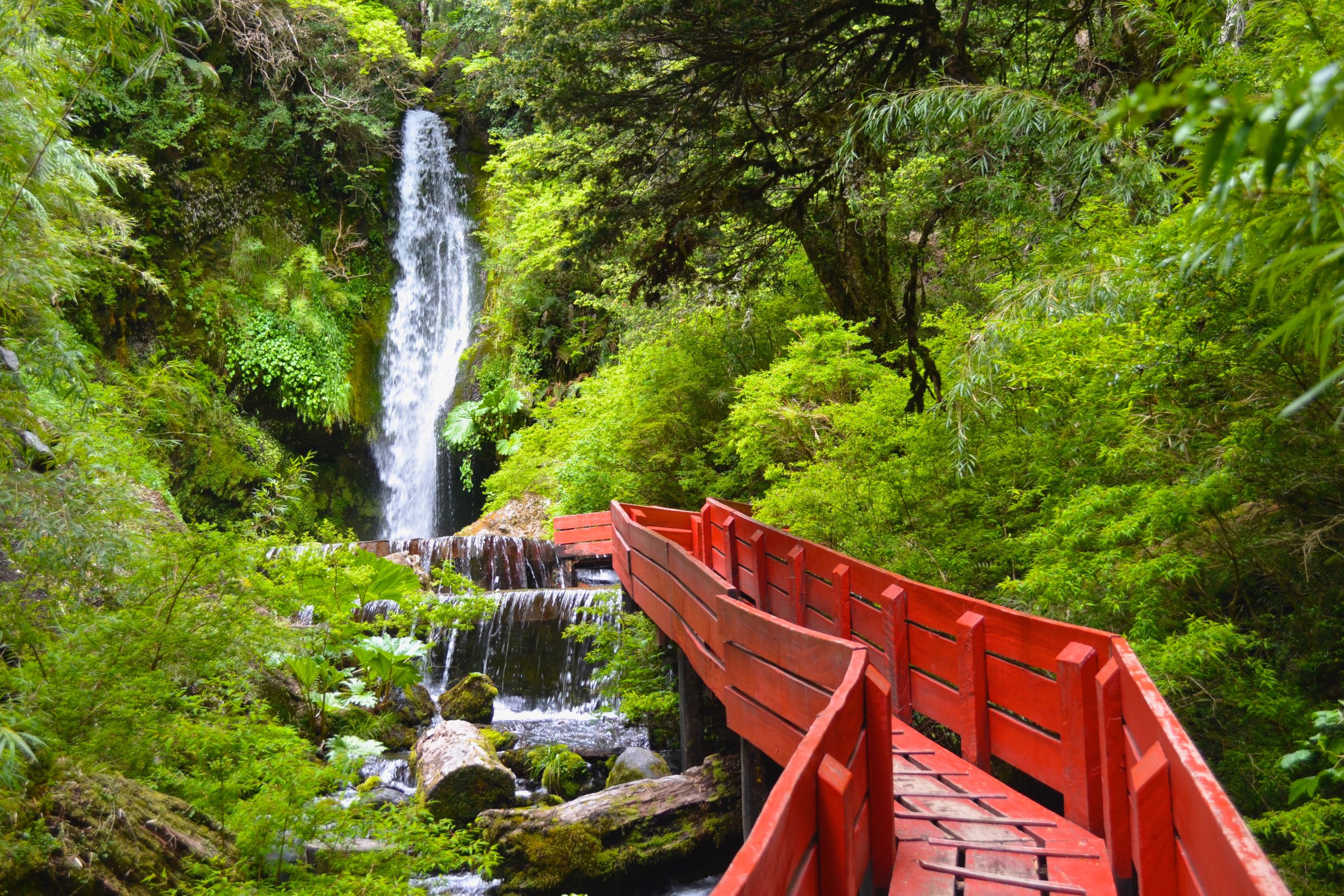
The now-famous red wooden walkways follow the contours of the narrow ravine, connecting a series of thermal pools and allowing visitors to move between thermal water, native forest, and waterfalls without ever losing the feeling that they are somewhere deep in the wilderness.
That combination of thoughtful architecture and native landscape is what makes these termas so memorable, and the main reason they are my family’s favorite hot springs in the area.
There are several beautiful hot springs around Pucón and Villarrica, each with its own characteristic charm — and several with quality spa services and amenities that lend an air of luxury — but there’s something special about being tucked into the forest on the slopes of a volcano, feeling as if you’ve stumbled upon a little oasis that nature itself seems to have brought forth — there’s nothing quite like it.
Tension Between Landowners & Operators
As news of the transition and rebranding has circulated over the past several weeks, a dispute between the Martini family and the Geometricas operators has come to light and ruffled a few feathers online.
The arrangement between the two parties was a private lease that for more than two decades allowed the Termas Geometricas team to develop and operate the thermal complex; however, it seems that tensions had been quietly mounting over the years, and both parties have provided different narratives as to why the lease came to an end.
The Geometricas–Martini Hot Springs Transition: What It Means for Travelers in 2026
The competing accounts of the dispute itself are less important to your itinerary than understanding what happens next: for travelers, the key news is that the site itself has remained open with almost no gap in service.
While Termas Geometricas plans to carry its brand identity forward elsewhere, retaining its famous name, the hot springs at Cajón Negro are expected to continue operating as usual under their new name, Termas Martini.
That means the hot springs travelers have known for years — the forested ravine, the thermal waters, and the existing infrastructure — is not simply going away.
However, this could cause some confusion for travelers: you may see “Termas Geometricas” referring to a future destination or to the original property near Coñaripe.
Also, a change in operator can mean changes to everything from entrance prices and reservations, to food service and the overall visitor experience.
What Will Happen to the Red Walkways?
This is probably the biggest question that first-time and longtime visitors alike will be asking.
The architectural experience of Termas Geometricas is intimately connected to the original site — and to Germán del Sol’s design.
The red walkways and the way the pools are threaded through the forest are not simply a generic feature of Chilean hot springs; they are part of what made Geometricas distinctive, and they’ve become as much a part of the site as the surrounding nature.
Will the Martinis make changes to the design, perhaps to something more reflective of their renewed involvement with their family land?
Will Termas Geometricas carry the brand’s identity forward by implementing the iconic red wooden pathways at its new location?
It remains to be seen.
Changing Waters in the Lake District
For those of us who live in and around Chile’s Lake District, places like Termas Geometricas become more than an item on a travel itinerary.
They’re part of the landscape we associate with this corner of the world: the rainy forests, volcanic mountains, fresh rivers, and the curious luxury of soaking in naturally hot water while surrounded by wilderness.
Termas Geometricas has certainly helped introduce that fingerprint of southern Chile to travelers from around the world, and I believe Termas Martini will continue to do the same.
Online chatter has taken on a cheerful tone, with locals sharing fond memories of bathing in the hot springs with the Martinis during the early years, and many hopeful commenters look forward to positive changes the owners might implement — everything from more varied gastronomic offerings and improved changing rooms to more accessible year-round pricing.
One thing is certain: we’re looking forward to seeing how Termas Martini will both preserve its essence and evolve in the hands of those who love it most. And if you’re considering soaking in Cajón Negro’s thermal waters during your travels through Chile, you’re in for an experience you’ll never forget.